AI Data Center Fiber Cabling: 400G/800G/1.6T Guide
AI training clusters have changed the economics of data center cabling. A GPU pod is no longer a handful of 10G uplinks — it is thousands of parallel 400G and 800G lanes that must run error-free for weeks at a time. This guide explains how to plan fiber, connectors, and optics for AI workloads in 2026, and what to specify when you buy.
Why AI Workloads Break Traditional Cabling Plans

Classic enterprise data centers were north-south dominated: user traffic came in, hit a server, and left. AI clusters are the opposite. During distributed training, GPUs exchange gradients on every step, producing sustained east-west traffic that saturates the fabric. Three consequences follow:
Port density explodes. A single rail-optimized GPU rack can require 64–128 optical ports, which is why MPO/MTP® trunk cabling and breakout harnesses replace individual duplex patch cords.
Latency and jitter matter. Collective operations run at the speed of the slowest link, so a single dirty connector endpoint can throttle an entire job.
Link budgets tighten. At 800G and 1.6T with PAM4 signaling, insertion loss and return loss margins are far smaller than they were at 10G NRZ.
Fabric Architecture: Rail-Optimized Clos
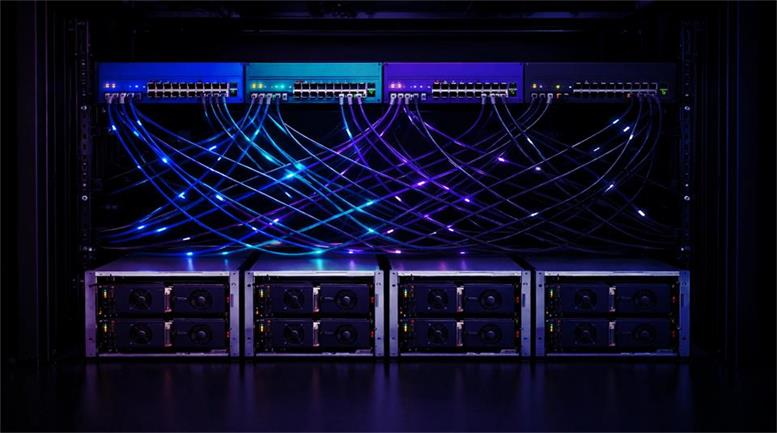
Most large AI deployments in 2026 use a rail-optimized Clos (leaf-spine) topology. Each GPU in a server connects to a different leaf switch ("rail"), so that the same-ranked GPUs across many servers share a dedicated switching plane. This keeps all-reduce traffic on a single hop where possible and makes cabling highly repeatable.
Practical implication: cable in rails, not in racks. Pre-terminated MPO trunks between the GPU row and the leaf row, plus breakout harnesses at each end, are far more reliable and faster to deploy than field-terminated duplex patching.
Optics, Fiber, and Connector Matching
The most common planning mistake is choosing an optic before confirming the fiber type and connector it actually requires. Use the table below as a starting reference.
Optical Interface | Fiber Type | Connector | Typical Reach |
|---|---|---|---|
100G SR4 | OM4 multimode | MPO-12 | 100 m |
400G SR8 | OM4 multimode | MPO-16 | 100 m |
400G DR4 | G.652.D single mode | MPO-12 (APC) | 500 m |
400G FR4 | G.652.D single mode | Duplex LC | 2 km |
800G SR8 | OM4 multimode | MPO-16 | 60–100 m |
800G DR8 | G.652.D single mode | MPO-16 (APC) | 500 m |
800G 2xFR4 | G.652.D single mode | Dual duplex LC / CS | 2 km |
1.6T DR8 / 2xDR4 | G.652.D single mode | MPO-16 (APC) | 500 m |
Two rules of thumb: multimode (OM4/OM5) is limited to roughly 100 m at 400G and shorter at 800G, so any inter-row or inter-hall run should be planned as single mode. And MPO-16 — not MPO-12 — is the standard interface for eight-lane 400G/800G parallel optics.
APC vs UPC in Parallel Single Mode
Parallel single-mode optics (DR4, DR8) specify APC (8° angled) MPO endfaces to control return loss. Mixing an APC trunk with a UPC harness produces a high-loss, high-reflection joint that may pass a visual check and still fail under load. Standardize polish type across the entire channel and label it clearly.
DAC, AOC, or Transceivers?
Media | Practical Reach | Power | Best Use |
|---|---|---|---|
Passive DAC | Up to ~3 m | Essentially zero (passive copper) | In-rack GPU-to-ToR links |
Active copper (ACC/AEC) | 3–7 m | Low, a few watts per end | Adjacent-rack links |
AOC | 3–100 m | Moderate | Fixed intra-row links, no patching |
Transceivers + structured fiber | 100 m – 2 km+ | Highest, but flexible | Leaf-spine and inter-hall |
Note that passive DAC draws no meaningful power itself; the savings come from not powering two optical engines. At AI cluster scale, replacing even 20% of short optical links with DAC or AEC can remove tens of kilowatts from a hall.
Loss Budgets and Cleanliness
For 800G parallel links, plan a channel budget in the range of 1.0–1.5 dB for single-mode DR interfaces including all connector pairs. That leaves very little room for error, so:
Specify low-loss MPO connectors (typically ≤0.35 dB typical per mated pair, ≤0.50 dB max).
Inspect and clean every endface before mating — contamination is the dominant cause of AI-fabric link flaps.
Keep dust caps on until the moment of connection, on both trunks and transceiver ports.
Test with an MPO-capable loss test set, not just a link-up indication on the switch.
Polarity and Documentation
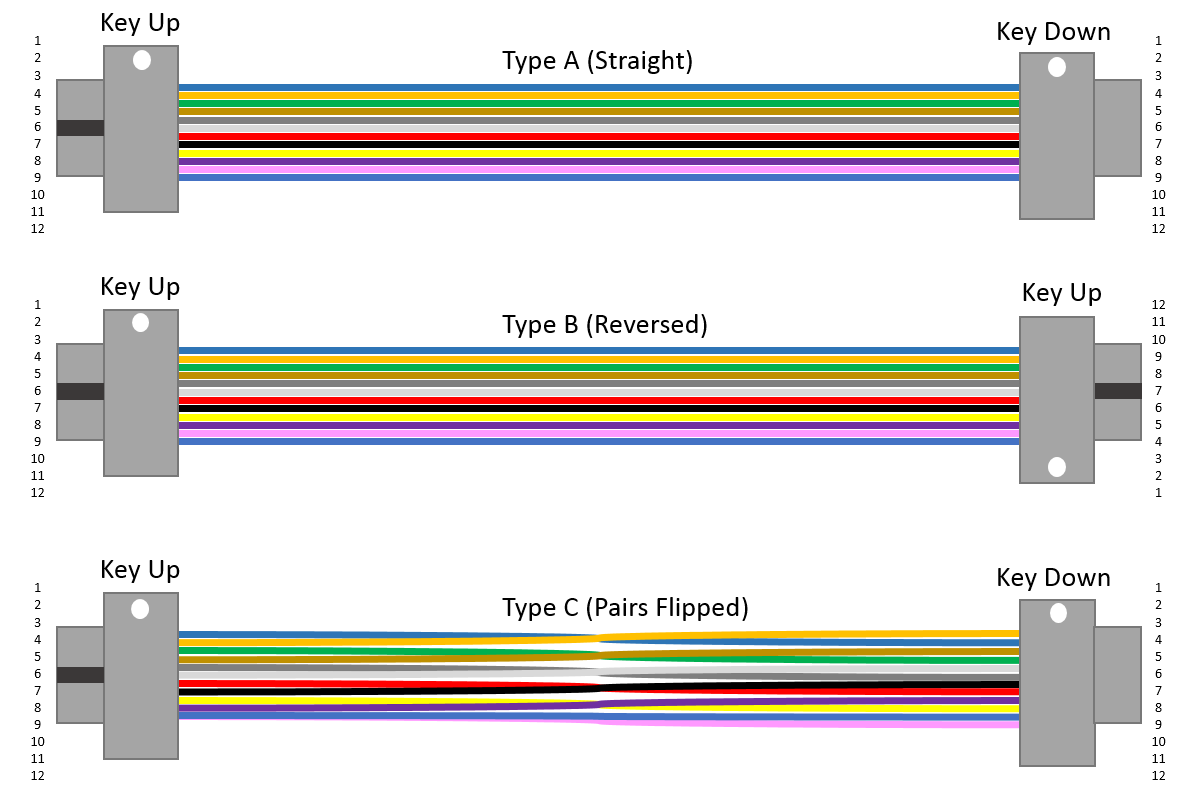
Parallel optics only work if lane order is preserved end to end. Choose one MPO polarity method (Method A, B, or C) and apply it consistently across trunks, harnesses, and cassettes. Every trunk should carry a printed label with fiber count, polarity method, polish type, and both endpoints. In a cluster with thousands of links, documentation is a performance feature, not paperwork.
What to Specify When You Order
Fiber grade: OM4 or OS2 (G.652.D); G.657.A1/A2 where bend radius is constrained in dense trays.
Connector: MPO-12 or MPO-16, UPC or APC, plus polarity method.
Loss class: standard, low-loss, or ultra-low-loss.
Jacket: LSZH or plenum-rated, plus armored construction for exposed pathways.
Length tolerance: pre-terminated trunks should be ordered to measured route length plus slack.
Test data: require per-channel IL/RL reports shipped with the assemblies.
Frequently Asked Questions
Can I run 800G over my existing OM4 plant?
Only for short links. 800G SR8 typically reaches 60–100 m on OM4 with an MPO-16 interface, and your existing OM4 trunks are probably MPO-12. Inter-row runs should be re-planned as single mode.
Is MPO-12 obsolete?
No. MPO-12 remains standard for 100G SR4 and 400G DR4. But eight-lane 400G/800G optics use MPO-16, so new AI builds should plan for both.
How much slack should I leave on trunks?
Enough to reach the far end of the patch field plus a service loop, while respecting the fiber's minimum bend radius. Over-length trunks coiled tightly are a common source of macrobend loss.
Source Your AI Data Center Cabling from Firsol
Firsol manufactures pre-terminated MPO/MTP® trunks, harnesses, and duplex patch cords to measured length with per-channel test reports, so your cluster deploys clean the first time.
MTP®/MPO Fiber Cable — trunks, harnesses, and breakout assemblies
Fiber Patch Cable — OS2, OM4 and OM5 duplex assemblies
Need a custom length, polarity, or polish combination? Request a quote and our engineering team will confirm the build sheet before production.