Fiber Optic Cable Types Explained: Single Mode vs Multimode
If you are specifying a fiber link, one of the first decisions is which fiber type to use. The wrong choice can mean paying for reach you will never use, or worse, a cable that cannot carry the speed and distance your network needs. This guide breaks down the main fiber optic cable types — single mode (OS1/OS2) and multimode (OM1–OM5) — from a buyer's perspective, with corrected specifications and a clear comparison table.
Why Are There Different Fiber Types?
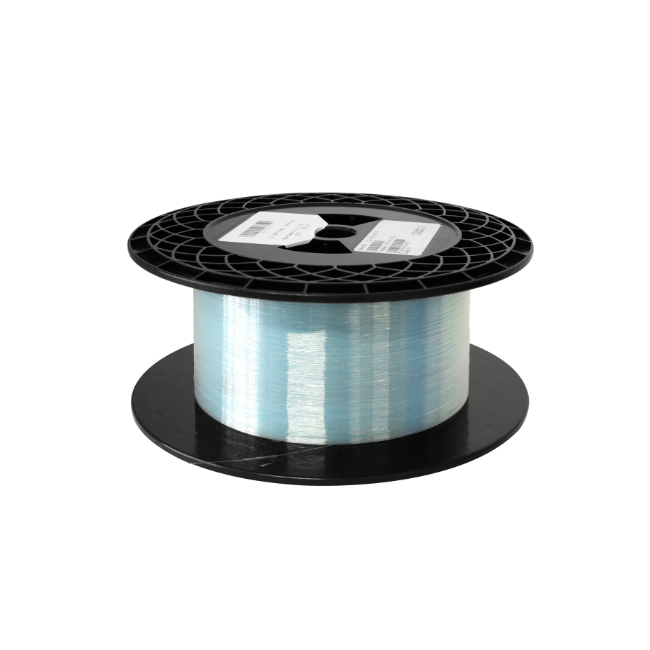
Fiber optic cable carries data as pulses of light travelling through a glass core, giving it far greater bandwidth, longer reach, and immunity to electromagnetic interference compared with copper. But no single fiber is optimal for every job. The two families — single mode and multimode — differ mainly in core diameter, which in turn drives distance, bandwidth, cost, and the optics you pair with them.
Single mode fiber (SMF) — ~9 µm core, one light path, long distance, high bandwidth.
Multimode fiber (MMF) — 50 or 62.5 µm core, multiple light paths, shorter distance, lower system cost over short links.
Single Mode Fiber: OS1 vs OS2
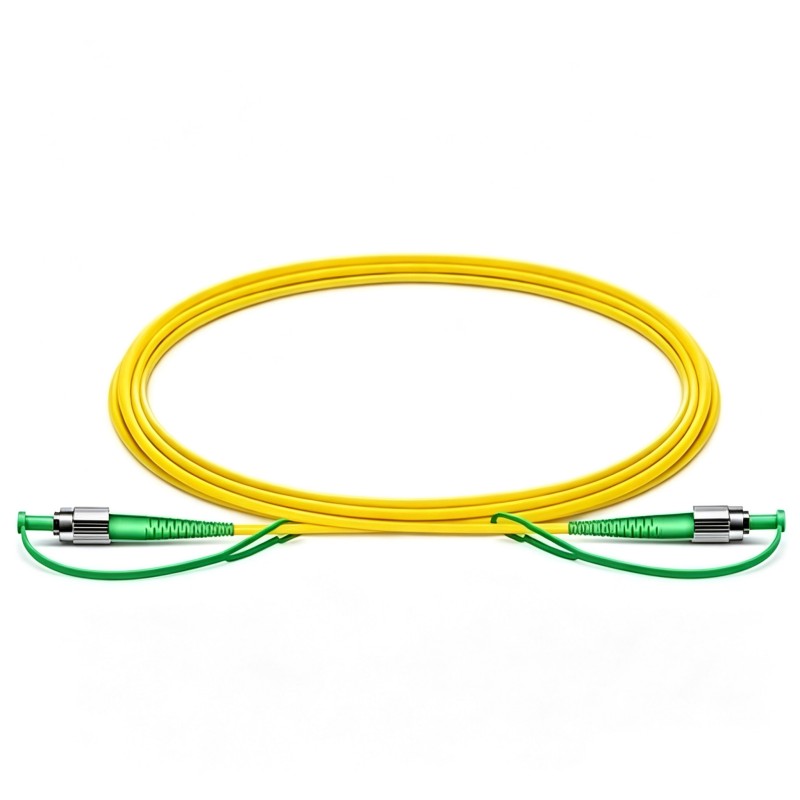
Single mode fiber uses a small ~9 µm core so only one mode of light propagates. This minimises modal dispersion and enables the longest reach and highest bandwidth. Both OS1 and OS2 are ISO/IEC 11801 designations built on ITU-T G.652 fiber; the difference is cable construction and maximum attenuation.
OS1
OS1 uses a tight-buffered construction optimised for indoor use — risers, equipment rooms, and campus interconnects. Maximum attenuation is commonly specified up to 1.0 dB/km at 1310 nm and 1550 nm, giving a practical reach of roughly 2–10 km.
OS2
OS2 uses a loose-tube construction for outdoor, duct, and direct-burial routes, built on low-water-peak G.652.C/D fiber. Attenuation is held to about 0.4 dB/km, so OS2 supports much longer spans — tens of kilometres, with 40–80 km backbone links common and further with amplification. OS2 is the practical choice for 40G/100G single mode.
Multimode Fiber: OM1 to OM5
Multimode fiber has a larger core (50 or 62.5 µm) that lets multiple light modes travel at once. This makes for cheaper transceivers over short distances, but modal dispersion limits reach. Multimode is graded OM1 through OM5.
OM1 — 62.5 µm core, legacy. ~1 Gbps to 300 m; only ~33 m at 10G. Often orange jacket.
OM2 — 50 µm core. ~1 Gbps to 550 m; ~82 m at 10G. Orange jacket.
OM3 — 50 µm laser-optimised. 10G to 300 m; 40G/100G to ~100 m. Aqua jacket.
OM4 — 50 µm laser-optimised. 10G to 400 m; 40G/100G to ~150 m. Aqua jacket.
OM5 — 50 µm wideband (WBMMF). Same 10G/40G/100G reach as OM4 but adds SWDM support across 850–950 nm for higher-density links. Lime-green jacket.
Typical Specifications
Grade | Core | Type | Wavelength | Key reach |
|---|---|---|---|---|
OS1 | ~9 µm | Single mode (indoor) | 1310 / 1550 nm | ~2–10 km |
OS2 | ~9 µm | Single mode (outdoor/long-haul) | 1310 / 1550 nm | Tens of km (40–80 km+ common) |
OM1 | 62.5 µm | Multimode | 850 / 1300 nm | 1G ~300 m; 10G ~33 m |
OM2 | 50 µm | Multimode | 850 / 1300 nm | 1G ~550 m; 10G ~82 m |
OM3 | 50 µm | Multimode (laser-optimised) | 850 nm | 10G ~300 m; 40/100G ~100 m |
OM4 | 50 µm | Multimode (laser-optimised) | 850 nm | 10G ~400 m; 40/100G ~150 m |
OM5 | 50 µm | Multimode (wideband) | 850–950 nm (SWDM) | 10G ~400 m; 40/100G ~150 m |
Values are typical for planning. Always confirm against the specific cable and transceiver datasheet.
Single Mode vs Multimode: How to Choose
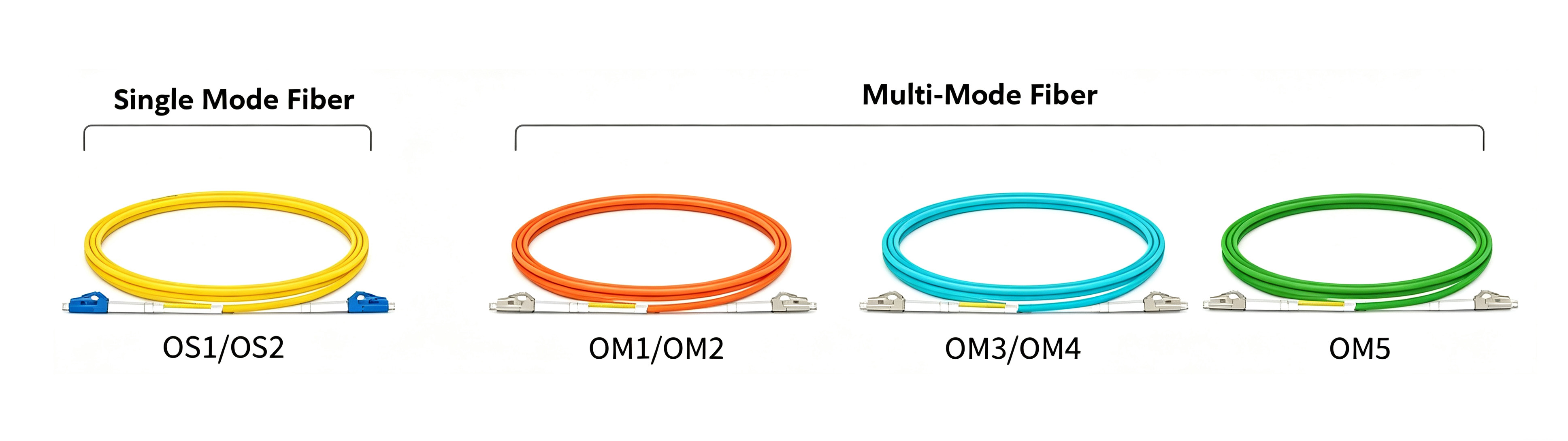
The decision usually comes down to distance and budget:
Choose single mode (OS2) for outdoor runs, metro/long-haul backbones, and any link that needs to scale to 40G/100G over distance.
Choose single mode (OS1) for indoor infrastructure where reach is short but you want a future-proof, low-dispersion medium.
Choose multimode (OM3/OM4/OM5) for data-center and in-building links under a few hundred metres, where short-reach optics keep system cost down.
Avoid new deployments on OM1/OM2 — they are legacy and cap out quickly at 10G+.
Frequently Asked Questions
What is the main difference between single mode and multimode fiber?
Core size. Single mode has a ~9 µm core carrying one light path for long distance and high bandwidth; multimode has a 50–62.5 µm core carrying many paths, which is cheaper over short links but limits reach.
Is OS2 better than OS1?
For distance, yes. OS2 has lower attenuation (~0.4 dB/km vs up to 1.0 dB/km) and loose-tube outdoor construction, so it reaches far further. OS1's tight-buffered build is better suited to short indoor runs.
Can I mix multimode grades in one link?
It is not recommended. Mixing OM3/OM4/OM5 changes bandwidth and connector loss budgets. Keep a single grade end to end, and never mix single mode and multimode on the same channel — the core mismatch causes severe loss.
What is OM5 for?
OM5 (wideband multimode) supports short-wavelength division multiplexing (SWDM) across 850–950 nm, letting one fiber pair carry more channels for high-density data-center links, while keeping OM4-class reach.
Which fiber should I choose for a new outdoor backbone?
Single mode OS2. It offers the longest reach, lowest loss, and a clear upgrade path to 40G/100G and beyond.