What Is a Fiber Optic Terminator and Why Is It Used?
In a fiber optic network, every optical port should be connected, protected, or terminated. An open port can send unwanted light back toward the source, collect dust on the ferrule end face, and add instability to sensitive optical systems. A fiber optic terminator solves this by giving an unused port a clean, controlled optical end point.
Also called an optical terminator or fiber terminator, this small passive component is used in patch panels, optical distribution frames (ODFs), test equipment, telecom systems, and laboratory setups. It reduces back reflection from open ports while shielding the connector interface from dust, contamination, and accidental damage. This guide explains how terminators work, the connector and polish options, how they differ from a dust cap, and how to choose the right one.
What Is a Fiber Optic Terminator?
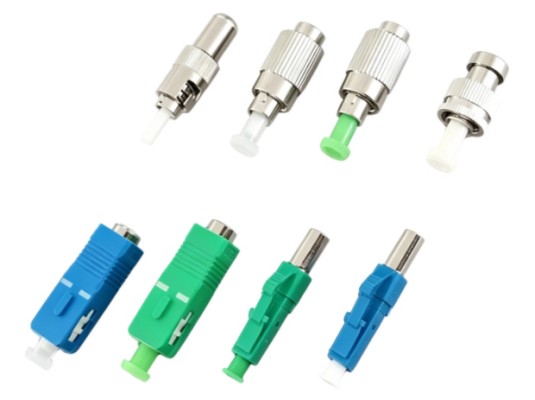
A fiber optic terminator is a passive component used to terminate an unused optical port. It carries the same connector interface as a standard patch cord — LC, SC, FC, or ST — but instead of passing an optical signal on to another device, it absorbs or suppresses reflected light at the end face.
In practice the terminator plugs into an unused adapter, port, or patch panel interface and provides a controlled optical termination, preventing that port from becoming a source of reflection or contamination. Terminators matter most in single mode fiber systems, where reflections affect performance more noticeably — telecom links, fiber testing, optical modules, PON, and high-precision optical setups.
Why Open Fiber Ports Can Be a Problem
An unused port looks harmless but can cause real issues:
Back reflection. An open fiber end reflects part of the signal back toward the source, which can disturb lasers, transceivers, and test instruments. Where return loss matters, this reduces measurement accuracy and system stability.
Dust and contamination. An exposed port collects particles on the ferrule end face, causing insertion loss, signal degradation, or damage when the port is later mated.
Poor maintainability. Unmarked open ports make an installation harder to service. Terminating unused ports keeps the fiber plant cleaner, more organized, and more predictable.
Main Functions of a Fiber Optic Terminator
Reduces back reflection from unused ports — valuable in single mode, CATV, WDM, and precision test systems.
Protects the port by keeping dust and contamination away from the fiber end face.
Improves stability by making the optical system more predictable during testing, troubleshooting, and long-term operation.
Keeps patch panels organized by clearly marking and protecting ports until they are put into service.
Connector Types: LC, SC, FC, ST
Terminators come with different connector interfaces. The right choice matches the port type on your equipment or patch panel.
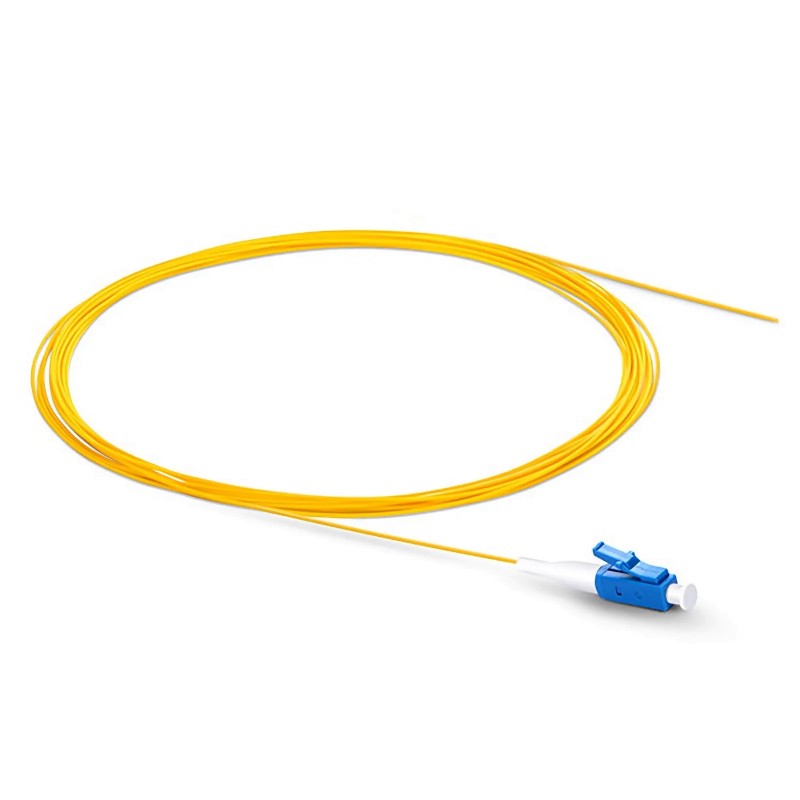
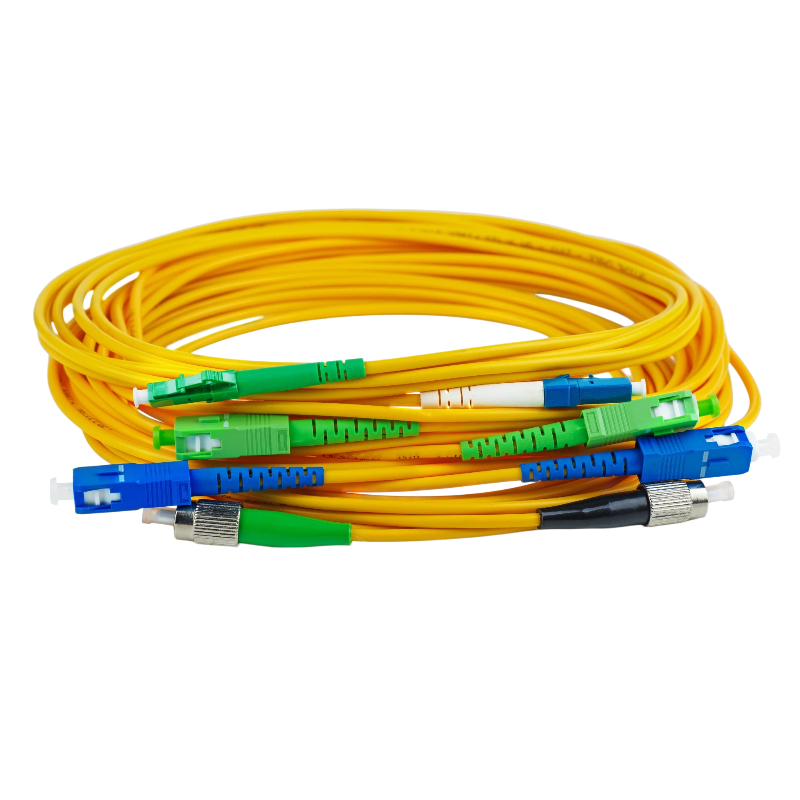
LC — compact and used in high-density patch panels, transceivers, data centers, and telecom gear. Available in LC/UPC and LC/APC.
SC — push-pull design that is easy to install and remove; common in ODFs, FTTH, and test equipment.
FC — threaded coupling for a secure mechanical connection; favored in test instruments, labs, and measurement systems.
ST — bayonet-style coupling found in legacy, industrial, and some test environments.
UPC vs APC: Choosing the Polish
Polish type is as important as the connector body. The two common options are UPC and APC.
UPC (Ultra Physical Contact) — a domed, straight end face used in standard single mode systems that need good return loss. Usually identified by blue bodies or boots. Suited to many telecom networks, patch panels, and general communication links.
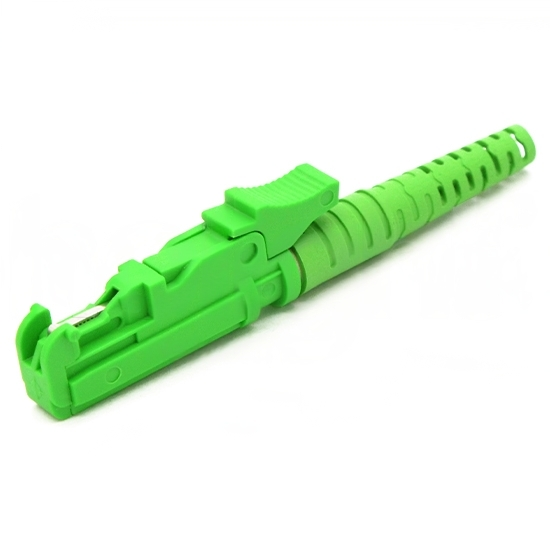
APC (Angled Physical Contact) — an 8° angled end face that directs reflected light into the cladding, giving much lower back reflection. Usually identified by green bodies or boots. Preferred for FTTH, CATV, WDM, and long-distance single mode links.
Important: always match APC to APC and UPC to UPC. Mixing the two causes poor physical contact, high insertion loss, and excessive reflection.
Typical Specifications
Exact figures vary by supplier and grade, but single mode terminators generally fall in the ranges below. Use them as a reference when comparing datasheets.
Parameter | UPC | APC |
|---|---|---|
Return loss | ≥ 50 dB | ≥ 60 dB |
Insertion / termination behavior | Absorbs signal (no through path) | Absorbs signal (no through path) |
Connector types | LC / SC / FC / ST | LC / SC / FC |
Fiber mode | Single mode (9/125 µm) | Single mode (9/125 µm) |
Boot / body color | Blue | Green |
Operating temperature | -40 °C to +85 °C | -40 °C to +85 °C |
Fiber Optic Terminator vs Dust Cap
A terminator is not the same as a dust cap. A dust cap only shields a connector or adapter from dust physically; it does not provide controlled optical termination and does not reduce back reflection. A terminator is designed for unused ports where reflection control matters, providing both interface protection and optical termination. Where optical performance counts, a terminator is the correct choice.
Where Are Fiber Optic Terminators Used?
Unused ports in fiber patch panels and optical distribution frames
Fiber optic test instruments and measurement equipment
Telecom transmission equipment and optical modules
FTTH and PON networks
CATV and RF-over-fiber systems
WDM and DWDM systems
Laboratory optical setups and network troubleshooting
How to Choose the Right Terminator
Match the connector type. LC port → LC terminator; the same for SC, FC, and ST.
Match the polish. UPC terminator for UPC ports, APC for APC ports — never mix them.
Match the fiber mode. Use single mode terminators in telecom, FTTH, WDM, and long-distance links.
Consider the environment. LC for high density, FC for secure threaded connections, APC for reflection-sensitive FTTH and CATV.
Firsol Passive Fiber Components
Firsol manufactures single mode passive optics for LC, SC, FC, and ST interfaces, with UPC and APC options for different network requirements. For port termination and reflection control we can supply single mode terminators in these common configurations: LC/UPC, LC/APC, SC/UPC, SC/APC, FC/UPC, FC/APC, and ST/UPC.
They pair naturally with the rest of our passive line, including variable optical attenuators, optical isolators, and fiber collimators. For terminator part numbers, quantities, and datasheets, contact our team for a quote.
Frequently Asked Questions
What does a fiber optic terminator actually do?
It terminates an unused optical port by absorbing reflected light and shielding the ferrule end face, so the open port does not add back reflection or collect dust.
Is a terminator the same as a dust cap?
No. A dust cap only provides physical dust protection. A terminator adds controlled optical termination that reduces back reflection, which a dust cap cannot do.
Should I use UPC or APC terminators?
Match whatever the port uses. Use UPC in standard single mode systems and APC in reflection-sensitive applications such as FTTH, CATV, and WDM. Never mate UPC to APC.
Do terminators work with multimode fiber?
Terminators are most important for single mode systems, where reflections have a larger impact. Multimode versions exist, but reflection control is usually a single mode concern.
How do I order the right terminator?
Confirm the connector type (LC/SC/FC/ST), the polish (UPC/APC), and the fiber mode, then contact Firsol with the port details and quantity for a quote.
Summary
A fiber optic terminator is a small but important part of a reliable network. By terminating unused ports it reduces back reflection, protects connector interfaces, and improves system stability — whether in patch panels, test instruments, telecom equipment, or optical distribution frames. When selecting one, always match the connector type, polish, and fiber mode to your system, and for single mode networks LC, SC, FC, and ST terminators with UPC or APC polish cover most port-termination needs.