FC Fiber Adapter Guide: Types, Features, and Applications
FC fiber adapters are widely used in fiber optic systems where stable mechanical connection, precise alignment, and reliable optical performance are required. Compared with push-pull style adapters such as LC or SC, FC fiber adapters use a threaded coupling mechanism, making them suitable for applications where vibration resistance and secure mating are important.
This article explains what an FC fiber adapter is, how it works, the common types available, and how to select the right FC adapter for your fiber optic network or optical device.
What Is an FC Fiber Adapter?
An FC fiber adapter, also known as an FC fiber optic adapter or FC fiber coupler, is a passive optical component used to connect two FC fiber optic connectors. Its main function is to align the ferrules of two connectors accurately so that optical signals can pass through with low insertion loss and stable return loss performance.
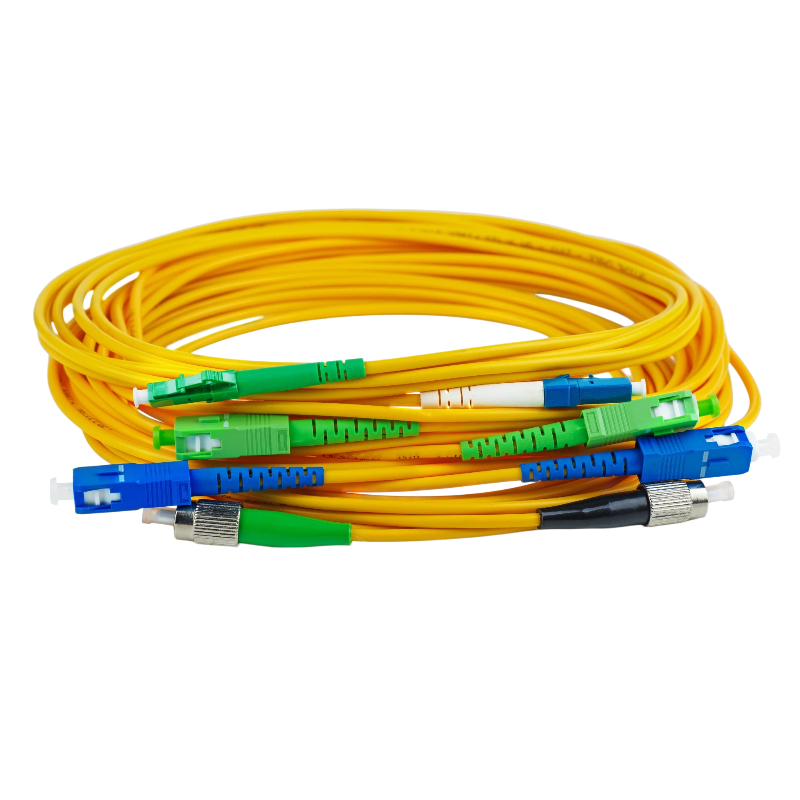
The term “FC” stands for “Ferrule Connector” or “Fiber Connector.” FC connectors are recognized by their round metal body and threaded locking structure. This screw-type connection provides strong mechanical stability, which is especially useful in test equipment, telecommunication systems, optical instruments, and industrial fiber optic applications.
How Does an FC Fiber Adapter Work?
Inside an FC fiber adapter, there is a precision alignment sleeve. This sleeve is the core part that keeps the two connector ferrules accurately aligned.
When two FC connectors are inserted into the adapter from opposite sides, the ferrules enter the alignment sleeve and meet at the center. Proper alignment helps reduce optical loss and ensures stable signal transmission.
For single mode FC fiber adapters, the alignment sleeve is usually made of ceramic because single mode fibers have a small core diameter and require high alignment accuracy. For some multimode or cost-sensitive applications, metal or phosphor bronze sleeves may also be used.
Key Features of FC Fiber Adapters
FC fiber adapters are commonly selected for applications that require a more secure connection than snap-in connector types. Their main features include:
Threaded coupling design for secure and stable connection
High precision alignment sleeve for low insertion loss
Good mechanical durability for repeated mating
Available in UPC and APC polishing types
Suitable for single mode and multimode fiber systems
Metal housing options for improved strength and durability
Multiple mounting styles, including square, rectangular, D-shape, and oval flange designs
Because of these features, FC adapters are often used in environments where the connection should not loosen easily.
FC/UPC vs FC/APC Fiber Adapter
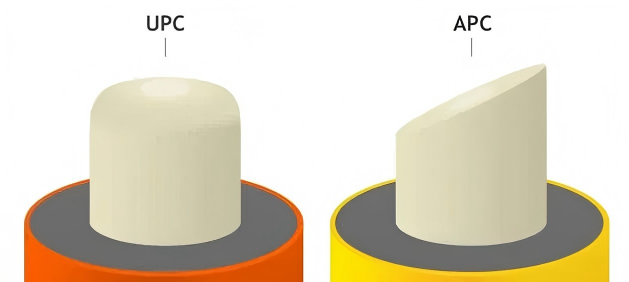
FC fiber adapters are commonly available in two polishing types: FC/UPC and FC/APC.
FC/UPC Fiber Adapter
FC/UPC adapters are used with FC/UPC connectors. UPC stands for Ultra Physical Contact. The ferrule end face is polished with a slightly curved surface to improve physical contact between two connectors.
FC/UPC adapters are widely used in general fiber optic communication systems, test equipment, and optical transmission links where standard return loss performance is sufficient.
FC/APC Fiber Adapter
FC/APC adapters are used with FC/APC connectors. APC stands for Angled Physical Contact. The ferrule end face is polished at an 8-degree angle, which helps reduce back reflection.
FC/APC adapters are preferred in systems that are sensitive to reflected light, such as CATV networks, passive optical networks, fiber sensors, high precision optical instruments, and some laser-based systems.
When choosing between FC/UPC and FC/APC adapters, the polishing type must match the connectors being used. FC/UPC and FC/APC connectors should not be mated together because the end face geometry is different and may cause high loss or connector damage.
Common Types of FC Fiber Adapters
FC fiber adapters are available in several mechanical structures to fit different installation requirements.
Simplex FC Fiber Adapter
A simplex FC fiber adapter connects one pair of FC connectors. It is the most common FC adapter type and is widely used for single fiber connections.
Duplex FC Fiber Adapter
A duplex FC fiber adapter contains two FC adapter ports in one housing. It is used when two separate fiber channels need to be connected side by side, such as transmit and receive links.
Square FC Fiber Adapter
Square FC adapters are commonly used in patch panels, optical distribution frames, and equipment panels. They may be available in one-piece or two-piece metal housing structures.
D-Type FC Fiber Adapter
D-type FC fiber adapters are designed for panel mounting. Their compact metal structure makes them suitable for optical equipment, fiber test instruments, and industrial control systems.
Rectangular FC Fiber Adapter
Rectangular FC adapters are another common panel-mount option. They are often used where a stable metal body and standard mounting holes are required.
FC Adapter With Flange
FC fiber adapters with flange can be fixed onto panels or enclosures with screws. The flange design provides extra mechanical stability and helps keep the adapter securely installed.
Single Mode and Multimode FC Fiber Adapters
FC fiber adapters can be used for both single mode and multimode fiber systems.
Single mode FC fiber adapters are typically used with OS2 9/125μm fiber. They require high precision alignment and are commonly used in long-distance optical transmission, test equipment, fiber lasers, and telecom systems.
Multimode FC fiber adapters are used with multimode fibers such as OM1, OM2, OM3, or OM4. Although FC connectors are more commonly associated with single mode systems, multimode FC adapters may still be used in some legacy equipment and specialized optical applications.
For best performance, the adapter type, connector type, fiber mode, and polishing type should all be matched correctly.
Metal Housing FC Fiber Adapters
Many FC fiber adapters use metal housing. Compared with plastic housing adapters, metal FC adapters offer better mechanical strength and durability. This makes them suitable for industrial environments, optical modules, test benches, laboratory equipment, and other applications where a robust connection is required.
Metal FC adapters are available in different shapes, including square, rectangular, D-shape, and oval flange styles. The correct housing type depends on the mounting space and panel design.
Typical Applications of FC Fiber Adapters
FC fiber optic adapters are used in a wide range of fiber optic systems, including:
Fiber optic patch panels
Optical distribution frames
Telecommunication networks
CATV systems
Fiber optic test equipment
Optical power meters and light sources
Fiber laser systems
Optical sensing systems
Laboratory and research equipment
Industrial fiber optic communication systems
Because of their threaded structure and stable connection, FC adapters are especially useful in applications where vibration, movement, or repeated testing may occur.
How to Choose the Right FC Fiber Adapter
When selecting an FC fiber adapter, the following factors should be considered:
Connector Polish Type
Choose FC/UPC adapter for FC/UPC connectors and FC/APC adapter for FC/APC connectors. Do not mix UPC and APC connectors.
Fiber Mode
Select a single mode FC adapter for OS2 single mode fiber systems. For multimode systems, choose a multimode-compatible adapter if required.
Adapter Structure
Choose simplex or duplex based on the number of fiber channels. For panel installation, select a flanged or panel-mount design.
Housing Material
Metal housing is recommended for applications requiring stronger mechanical protection and long-term durability.
Alignment Sleeve Material
Ceramic sleeves are preferred for high precision single mode applications. Metal sleeves may be used in some multimode or less demanding applications.
Installation Space
The adapter shape should match the panel cutout, equipment design, or mounting requirement.
Conclusion
FC fiber adapters provide a secure and reliable way to connect FC fiber optic connectors. With their threaded coupling mechanism, precision alignment sleeve, and durable housing options, they are widely used in telecom networks, test equipment, optical instruments, fiber laser systems, and industrial communication environments.
When choosing an FC fiber adapter, it is important to confirm the polishing type, fiber mode, adapter structure, housing material, and mounting style. A properly selected FC adapter helps ensure low insertion loss, stable optical performance, and long-term connection reliability.
Firsol offers FC fiber adapters in various configurations, including FC/UPC and FC/APC types, simplex and duplex designs, and multiple metal housing styles for different fiber optic applications.