Armored Fiber Optic Cable: Construction, Types, Benefits, and Selection Guide
Fiber optic cables provide high-speed, high-bandwidth data transmission, but the optical fibers inside them are relatively sensitive to crushing, impact, excessive bending, abrasion, and rodent damage. In installations where standard fiber cables may be exposed to these risks, additional mechanical protection is often necessary.
An armored fiber optic cable incorporates a protective armor layer around the optical fibers or cable core. This reinforced construction improves mechanical durability without affecting the fundamental transmission advantages of optical fiber.
This guide explains how armored fiber optic cables are constructed, their primary benefits and types, common applications, and how to choose between armored and non-armored fiber cables.
What Is an Armored Fiber Optic Cable?
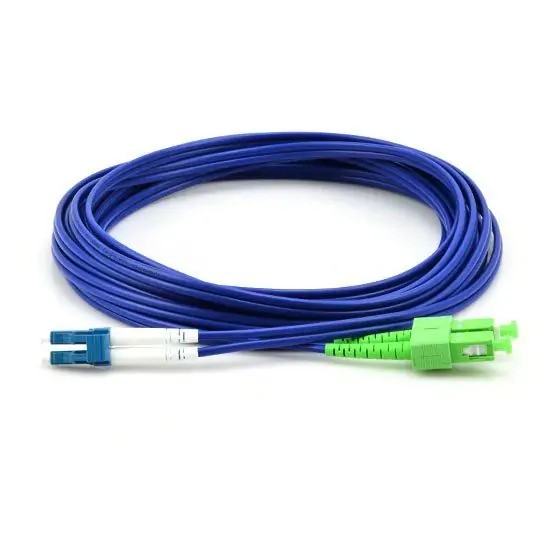
An armored fiber optic cable is a fiber cable that includes an additional protective layer, usually made of stainless steel, aluminum, or another durable metallic material.
The armor helps protect the internal fibers against:
Crushing and impact
Abrasion and accidental cutting
Excessive bending
Rodent damage
Mechanical stress during installation
Harsh indoor or outdoor conditions
Unlike electrical cable armor, the metallic armor in a fiber optic cable does not carry data or electrical current. Its primary purpose is mechanical protection.
Armored cables are commonly used in data centers, industrial facilities, telecommunications networks, outdoor installations, security systems, and other locations where fiber cables may be exposed to physical damage.
How Is an Armored Fiber Optic Cable Constructed?
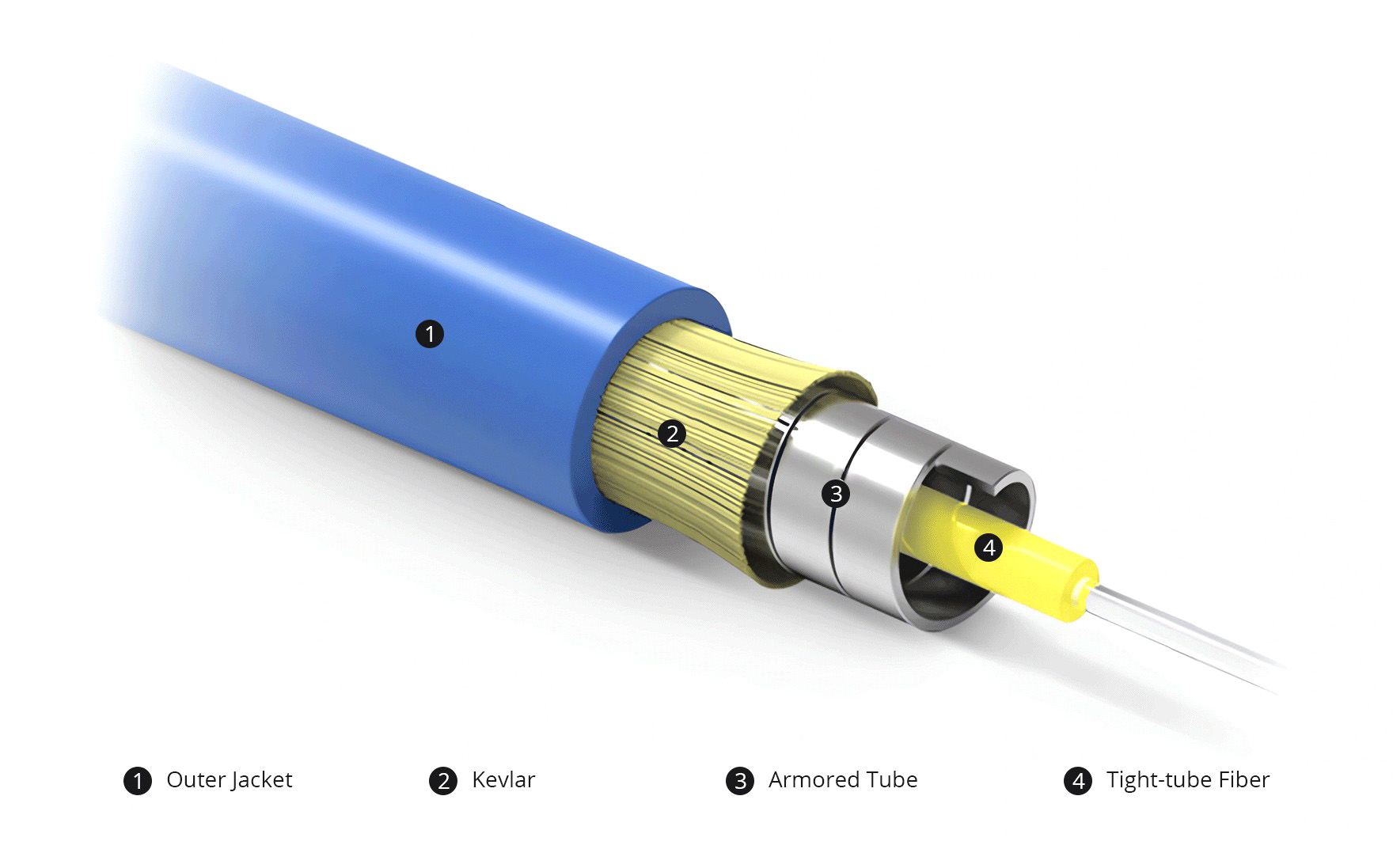
The exact construction varies according to the cable type, installation environment, fiber count, and required level of protection. A typical armored fiber cable may contain the following components.
1. Outer Jacket
The outer jacket protects the cable against moisture, abrasion, ultraviolet radiation, chemicals, and environmental exposure.
Common jacket materials include:
PVC: Frequently used for general indoor applications
LSZH: Produces limited smoke and halogen emissions during combustion
OFNR: Designed for vertical riser installations
OFNP: Designed for air-handling and plenum spaces
PE: Commonly used for outdoor cables because of its weather resistance
TPU: Suitable for industrial environments requiring resistance to abrasion, oil, and mechanical wear
The appropriate jacket should be selected according to the installation environment and applicable fire-safety requirements.
2. Strength Members
Strength members help protect the optical fibers from pulling and stretching forces during installation and operation.
Aramid yarn, commonly known by the DuPont trademark Kevlar, is frequently used because it provides high tensile strength without adding excessive weight.
3. Armor Layer
The armor layer provides the cable’s primary mechanical reinforcement. Depending on the cable design, it may consist of:
Flexible stainless-steel tubing
Corrugated steel tape
Interlocking aluminum armor
Spiral steel armor
Steel wire armor
Braided steel wire
Each armor structure offers a different balance of crush resistance, flexibility, tensile strength, rodent protection, cable diameter, and installation convenience.
4. Buffered Optical Fiber
The optical fibers may use a tight-buffered, loose-tube, or other protective construction.
In many indoor armored patch cables, each fiber is surrounded by a 900 μm tight buffer. This design provides additional mechanical protection and allows easier connector termination and handling.
Outdoor and higher-fiber-count armored cables may use loose-tube construction, often with water-blocking materials for improved environmental protection.
Benefits of Armored Fiber Optic Cable
Enhanced Mechanical Protection
The principal advantage of an armored fiber cable is its resistance to physical damage.
The additional armor helps prevent fiber breakage caused by crushing, impact, abrasion, accidental cutting, and improper handling. This makes armored cables particularly useful in high-traffic areas, industrial environments, exposed cable routes, and installations where cables cannot be fully protected by trays or conduits.
Improved Rodent Resistance
Rodents can damage conventional cable jackets and expose or break the optical fibers inside. Metallic armor provides an additional barrier that significantly reduces the risk of cable failure caused by biting.
For outdoor facilities, warehouses, utility spaces, tunnels, and similar environments, rodent resistance can be an important cable-selection factor.
Reliable Performance in Harsh Environments
Armored fiber optic cables can be manufactured with jackets and structural components designed for exposure to:
Moisture
UV radiation
Oil
Chemicals
Temperature fluctuations
Dust
Repeated mechanical contact
For example, industrial armored cables with TPU jackets provide strong resistance to abrasion, oil, and UV exposure, making them suitable for demanding outdoor and industrial applications.
Longer Service Life
By reducing the risk of mechanical damage, armored construction can extend the operating life of a fiber cable.
Although the initial cable cost is generally higher, improved protection may reduce:
Cable replacement frequency
Network downtime
Maintenance requirements
Emergency repair expenses
Damage caused during future construction work
The total installed cost may therefore be lower in environments where standard fiber cables would be vulnerable.
Simplified Installation in Exposed Areas
Armored fiber cables can sometimes be installed in locations where non-armored cables would require additional protective conduit.
However, installation requirements depend on local regulations, cable ratings, grounding requirements, and environmental conditions. Cable armor should not automatically be treated as a replacement for conduit in every application.
Types of Armored Fiber Optic Cable
Armored fiber cables can be classified according to armor structure, termination method, and installation environment.
Types Based on Armor Construction
Interlocking Armor
Interlocking armored fiber cables typically use a helically wound aluminum armor layer.
This construction provides:
Good crush resistance
High mechanical durability
Relatively good flexibility
Easier routing than some rigid steel-armored designs
Interlocking armor is commonly used in data centers, commercial buildings, industrial facilities, and other indoor or indoor/outdoor installations.
Corrugated Steel Armor
Corrugated armored cables use a longitudinally applied steel tape around the cable core.
They offer strong:
Crush resistance
Impact resistance
Moisture protection
Rodent resistance
Corrugated steel armor is frequently used in outdoor, duct, conduit, and direct-burial cable designs.
Flexible Stainless-Steel Armor
Flexible stainless-steel tubing is commonly found in armored fiber patch cables and pigtails.
It protects the fiber against compression, bending, and rodent damage while maintaining sufficient flexibility for routing inside equipment rooms, data centers, laboratories, and communication cabinets.
Steel Wire Armor
Steel wire armored cables are designed for applications requiring high tensile strength and substantial mechanical protection.
They may be used in demanding outdoor, industrial, aerial, underground, or specialized infrastructure installations.
Other specialized constructions include square-lock armor, spiral steel armor, and braided steel-wire armor. The appropriate design depends on the required flexibility, tensile strength, crush resistance, and operating environment.
Types Based on Termination Method
Pre-Terminated Armored Fiber Cable
Pre-terminated cables are supplied with factory-installed and tested connectors.
Examples include:
Armored fiber patch cables
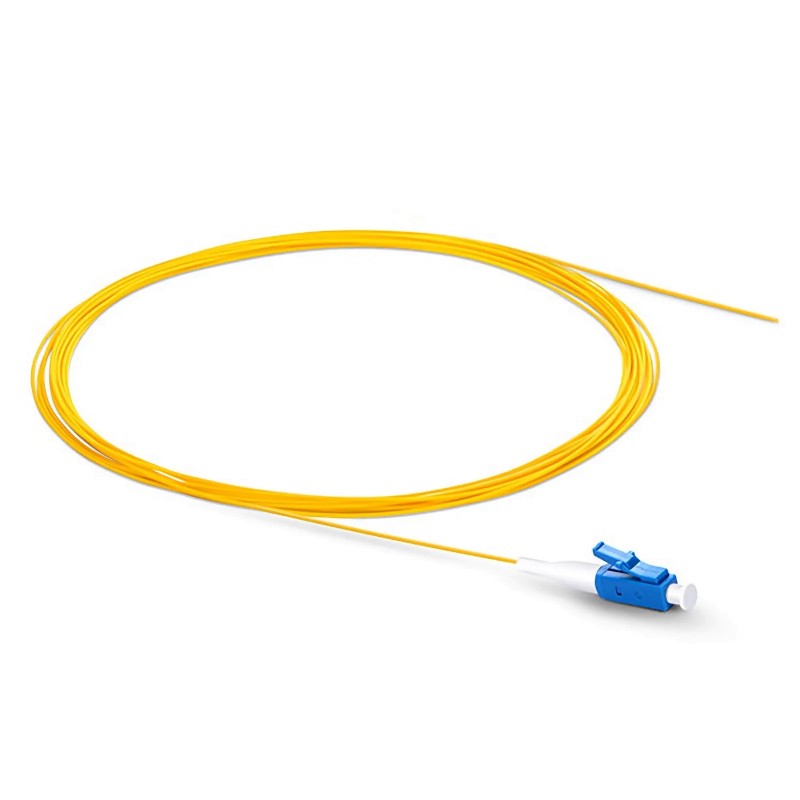
Armored fiber pigtails
Armored trunk cables
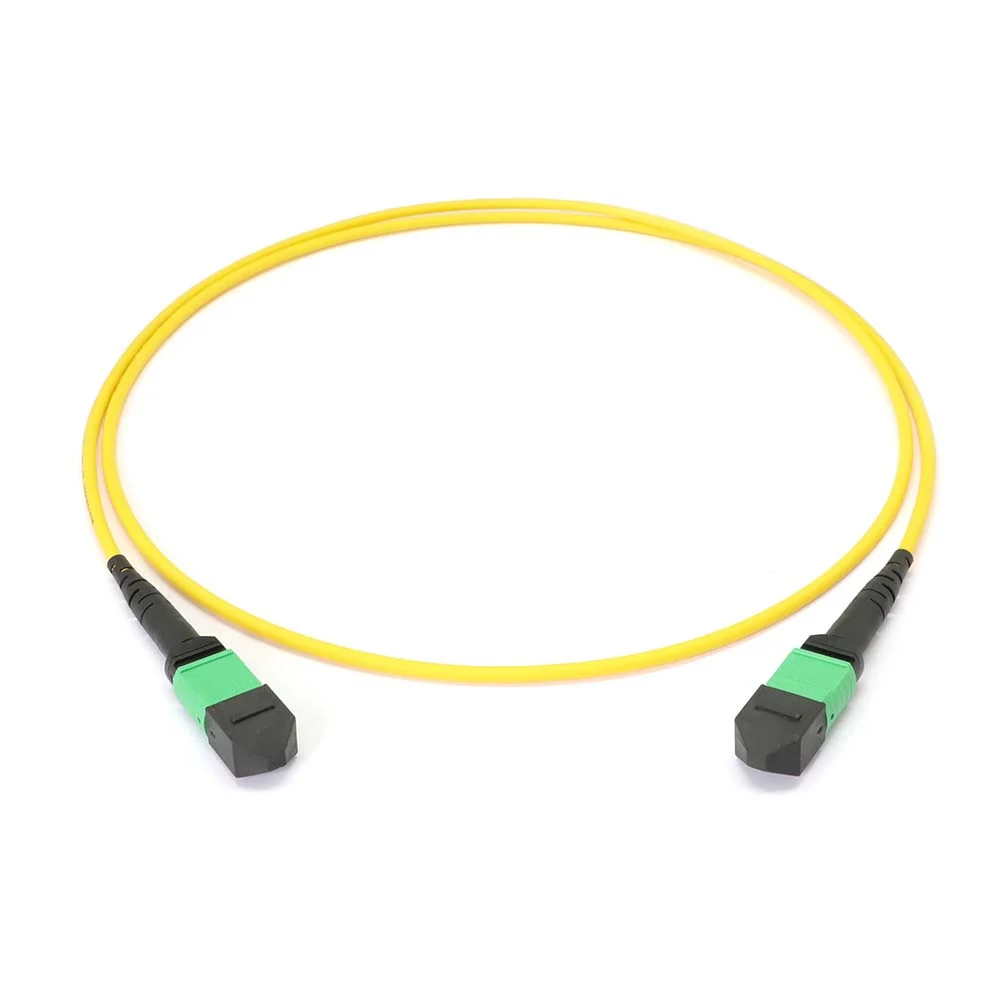
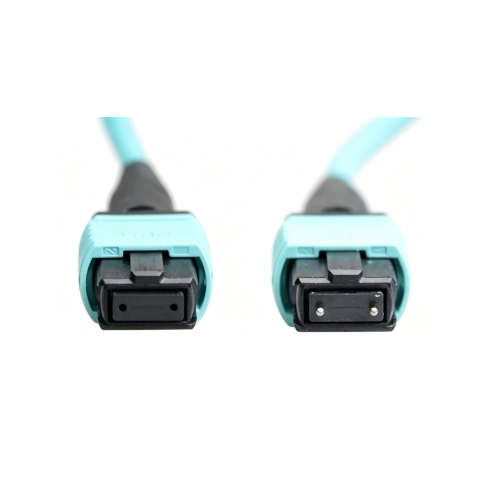
Pre-terminated multi-fiber assemblies
Their main advantages include faster deployment, consistent connector performance, reduced installation labor, and no requirement for field polishing.
They are commonly used in data centers, enterprise networks, telecommunications rooms, and equipment interconnections.
Field-Terminated Armored Fiber Cable
Field-terminated cables are installed first and terminated on-site.
This approach is suitable when:
Exact cable lengths cannot be determined in advance
The cable must pass through narrow conduits
Long outdoor cable runs are required
Connector installation is more practical after cable routing
Field termination provides greater installation flexibility, but preparing and terminating heavily armored cable can require additional tools, time, and technical expertise.
Types Based on Installation Environment
Indoor Armored Fiber Cable
Indoor armored fiber cables are used where cables may be exposed to physical damage, frequent handling, or rodent activity.
Common applications include:
Data centers
Enterprise networks
Telecommunications rooms
Factory floors
Surveillance systems
Medical facilities
Laboratories
Building backbones
Indoor cables may be supplied with PVC, LSZH, OFNR, or OFNP jackets, depending on fire-safety and installation requirements.
Outdoor Armored Fiber Cable
Outdoor armored fiber cables are designed to withstand moisture, UV exposure, temperature changes, impact, and other environmental conditions.
They are commonly installed in:
Underground ducts
Outdoor conduits
Direct-burial routes
Campus networks
Telecommunications infrastructure
Industrial facilities
Utility environments
The cable must be specifically rated for its intended installation method. An outdoor-rated armored cable is not necessarily suitable for direct burial unless the manufacturer identifies it as a direct-burial cable.
Armored vs. Non-Armored Fiber Optic Cable
Factor | Armored Fiber Cable | Non-Armored Fiber Cable |
|---|---|---|
Mechanical protection | High resistance to crushing, impact, abrasion, and rodent damage | Lower mechanical protection |
Flexibility | Generally less flexible because of the armor layer | Lighter and easier to route |
Cable diameter | Usually larger | Usually smaller |
Weight | Heavier | Lighter |
Installation | Suitable for exposed or mechanically demanding routes | Best suited to protected pathways |
Cost | Higher initial cost | More economical for routine installations |
Maintenance risk | Lower in harsh or exposed environments | Higher when physical damage is possible |
Typical applications | Industrial sites, outdoor routes, data centers, high-traffic areas | Offices, protected conduits, equipment cabinets, controlled environments |
Neither cable type is universally better. The correct choice depends on the installation environment and the actual risk of physical damage.
When Should You Use Armored Fiber Cable?
Armored fiber cable should be considered when:
The cable will be installed in an exposed location
Crushing or impact is possible
Rodents are present
The cable passes through a factory or industrial area
The route experiences frequent personnel or equipment movement
Additional protection is required during installation
Outdoor, underground, or direct-burial deployment is planned
Network downtime would create substantial operational costs
A non-armored cable may be more appropriate when the cable is installed inside a protected rack, enclosed pathway, cable tray, innerduct, or controlled office environment.
Using armor where it is not required may unnecessarily increase cable cost, weight, diameter, and installation difficulty.
How to Select the Right Armored Fiber Optic Cable
Before ordering an armored fiber cable, evaluate the following specifications.
Installation Environment
Determine whether the cable will be used indoors, outdoors, underground, in a conduit, in a plenum space, or in an industrial environment.
Fiber Type
Select the appropriate fiber according to the transmission system:
OS2 single-mode fiber for long-distance and high-bandwidth links
OM1, OM2, OM3, OM4, or OM5 multimode fiber for compatible short-distance applications
Armor Structure
Choose the armor according to the primary mechanical risk:
Flexible stainless-steel tubing for patch cables
Interlocking armor for indoor commercial and industrial routes
Corrugated steel armor for outdoor or underground protection
Steel wire armor for high-tensile-strength applications
Jacket Material and Rating
The cable jacket must match the environment, fire code, and installation method. Common options include PVC, LSZH, OFNR, OFNP, PE, and TPU.
Connector Type
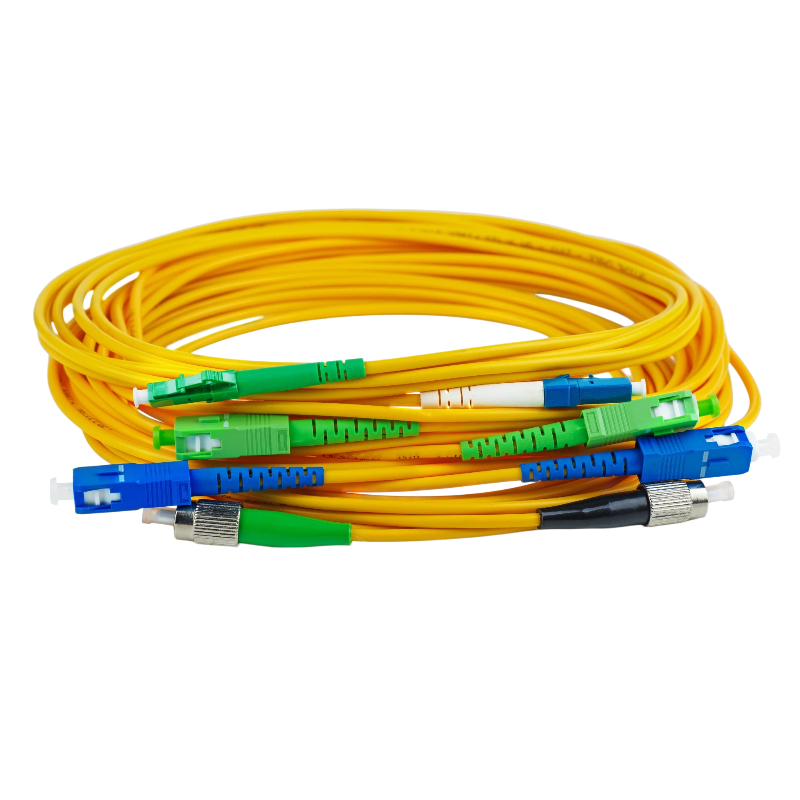
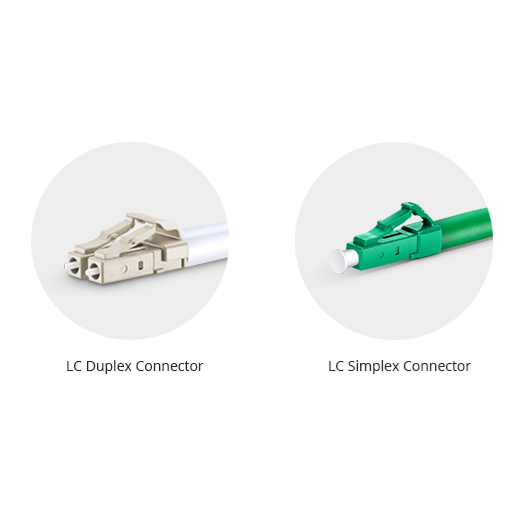
For pre-terminated cables, confirm the connector interface and polish type. Common options include:
LC
SC
FC
ST
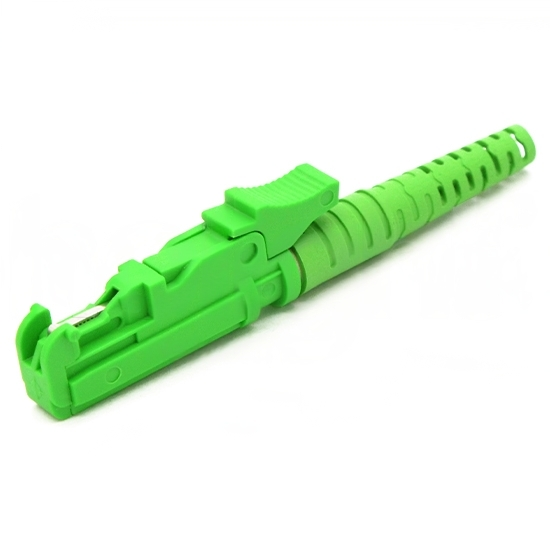
E2000
UPC
APC
Connector type, fiber type, and polish must be compatible with the connected equipment.
Cable Length and Diameter
Confirm the required cable length, outer diameter, routing space, minimum bend radius, and allowable pulling tension before installation.
Fiber Count
Armored fiber products are available as simplex, duplex, and multi-fiber cables. The fiber count should account for current network requirements and reasonable future expansion.
Frequently Asked Questions
Does armor affect optical performance?
The armor itself does not transmit the optical signal and should not reduce performance when the cable is correctly designed, manufactured, and installed.
However, excessive pulling, twisting, or bending during installation can still damage the internal fibers. The cable’s specified minimum bend radius and maximum tensile load must always be observed.
Is armored fiber cable completely rodent-proof?
Metal armor provides substantially greater rodent resistance than a standard cable jacket, but no cable should automatically be described as completely rodent-proof under every condition.
For locations with severe rodent activity, cable routing, conduit protection, pest control, and the selected armor structure should be evaluated together.
Can armored fiber cable be used outdoors?
Yes, provided the complete cable—not only the armor—is rated for outdoor use. Outdoor cables require suitable jackets, water-blocking features, and environmental resistance.
Can armored fiber cable be directly buried?
Only cables specifically rated for direct burial should be installed directly in the ground. An armored construction alone does not confirm that a cable is suitable for direct-burial applications.
Does metallic armor need to be grounded?
Grounding and bonding requirements depend on the cable construction, installation method, local electrical codes, and network design. The metallic components should be handled according to applicable regulations and the cable manufacturer’s installation instructions.
Conclusion
Armored fiber optic cables provide an effective solution for protecting optical fibers in mechanically demanding, exposed, or harsh environments. Their reinforced construction helps reduce damage from crushing, abrasion, impact, excessive bending, and rodent activity while maintaining reliable optical transmission.
However, selecting the correct cable requires more than simply choosing an armored design. The armor structure, fiber type, jacket material, fire rating, connector type, cable length, and installation environment must all be considered.
Armored fiber cable is generally the better choice when durability and mechanical protection are priorities. Non-armored fiber cable remains a practical and economical option for protected indoor pathways where the risk of physical damage is low.