What Is a Simplex Fiber Pigtail? Types, Connectors, Applications and Selection Guide
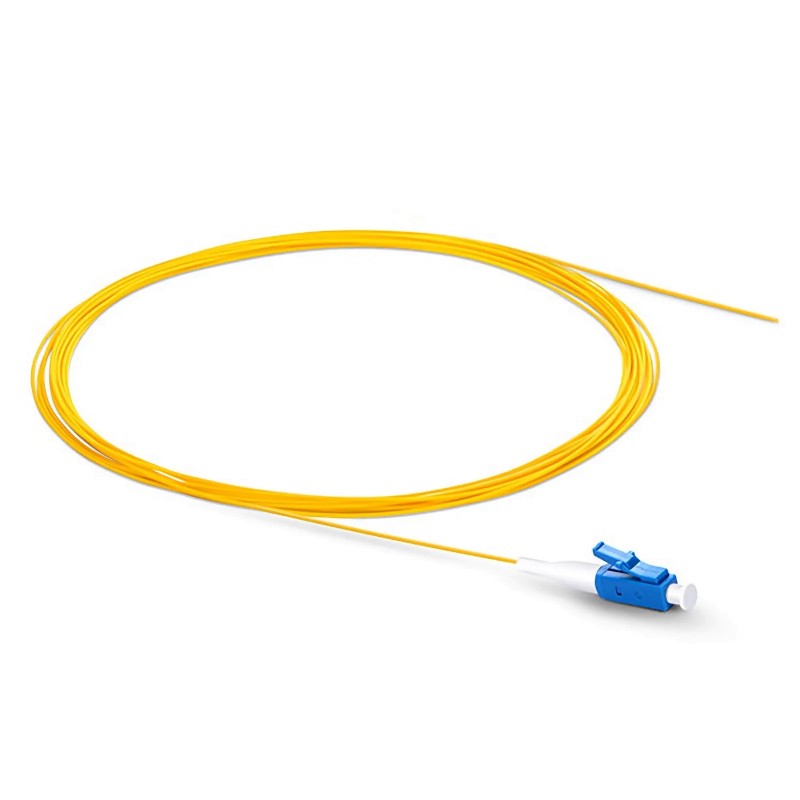
A simplex fiber pigtail is a single optical fiber that has a factory-terminated fiber connector on one end and an unterminated fiber on the other. The unterminated end is normally fusion-spliced or mechanically spliced to another optical fiber, while the connectorized end provides an interface for an adapter, patch cable, optical device, or network equipment.
Simplex fiber pigtails are widely used in fiber termination boxes, optical distribution frames, patch panels, splice trays, FTTH networks, telecom systems, and optical equipment.
Although the component itself is simple, selecting the correct pigtail requires matching several specifications, including fiber type, connector type, UPC or APC polish, fiber length, buffer construction, and optical performance.
This guide explains how simplex fiber pigtails work, how they differ from fiber patch cables, the main connector and fiber options, where they are used, and what to check before ordering.
What Does “Simplex” Mean in a Fiber Pigtail?
In this context, simplex describes the physical fiber configuration.
A simplex fiber pigtail contains one optical fiber and one connector. This is different from assemblies containing two or multiple fibers.
However, simplex should not automatically be interpreted as meaning that optical signals can travel in only one direction.
A single fiber can be used for conventional one-direction transmission, or it can carry signals in both directions when the network uses appropriate wavelength-division or BiDi technology. Therefore, when discussing a simplex pigtail, the term primarily indicates that the assembly contains one fiber, rather than defining the transmission protocol used by the system.
This distinction is important when selecting pigtails for FTTH, PON, BiDi Ethernet, WDM, sensing, and other single-fiber systems.
How Is a Simplex Fiber Pigtail Constructed?
The construction of a simplex fiber pigtail is relatively straightforward.
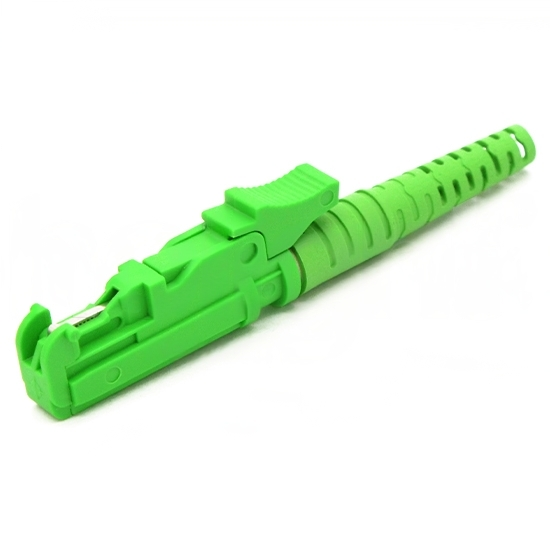
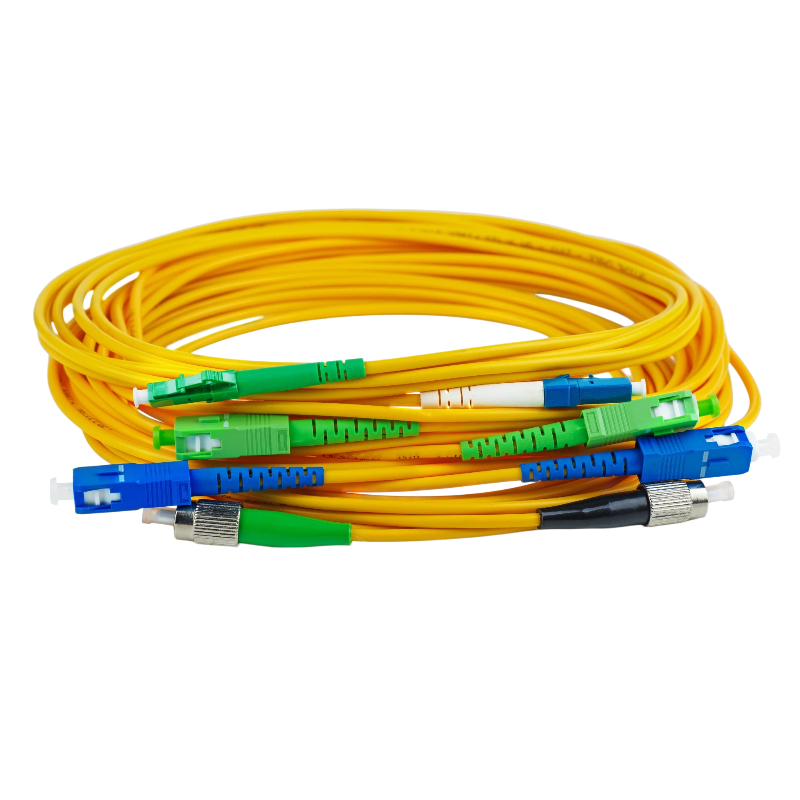
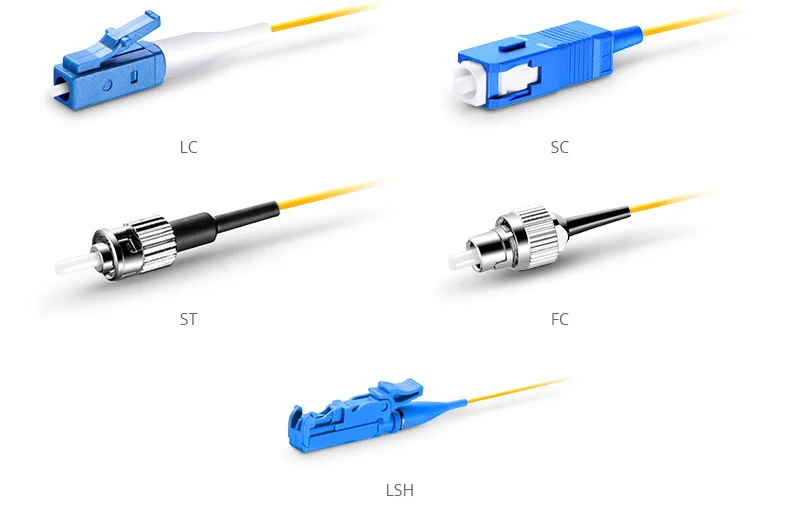
One end contains a factory-installed optical connector. Depending on the application, this may be LC, SC, FC, ST, E2000, or another connector format.
Behind the connector is an optical fiber protected by a buffer or tubing. A 0.9 mm buffered construction is common for pigtails installed inside splice trays, distribution boxes, and optical distribution frames because it provides protection while remaining compact and easy to route.
The opposite end remains unterminated. During installation, the technician strips and prepares this end before splicing it to the installed optical fiber.
After the splice is completed, a splice protection sleeve is normally placed over the splice and secured inside a splice tray or enclosure.
This design combines a factory-finished connector with a field-made fiber splice.
Why Are Fiber Pigtails Used?
Optical connectors require precise ferrule alignment and careful end-face preparation. Producing a high-quality connector termination directly in the field can require specialized tools, polishing procedures, inspection equipment, and operator experience.
A fiber pigtail moves most of this connector preparation to the factory.
The connector is terminated and polished during manufacturing, while the installer performs a fiber splice at the installation site. Modern fusion splicing can provide a stable, low-loss permanent connection when the fibers are correctly prepared and aligned.
As a result, pigtails are commonly used when many fibers need to be terminated inside an optical distribution system.
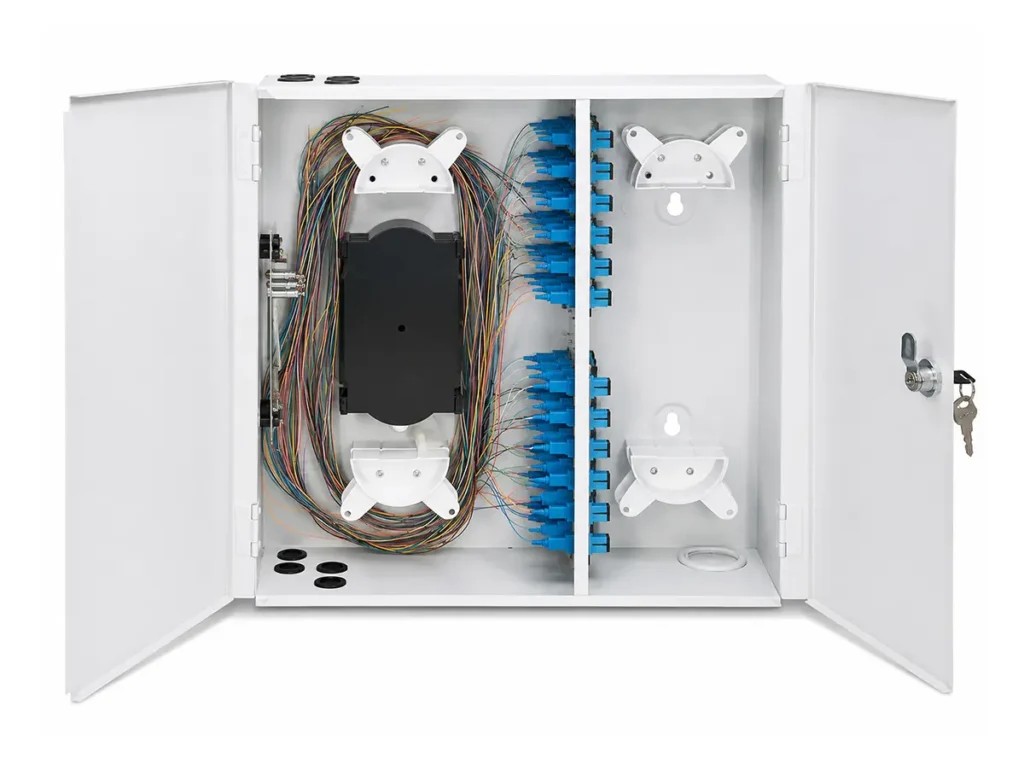
For example, a multi-core incoming fiber cable can be opened inside an optical distribution frame. Each individual fiber is then fusion-spliced to a corresponding pigtail. The connector ends of those pigtails are installed into adapters on the front of the panel, creating accessible connector ports for patching.
Simplex Fiber Pigtail vs Fiber Patch Cord
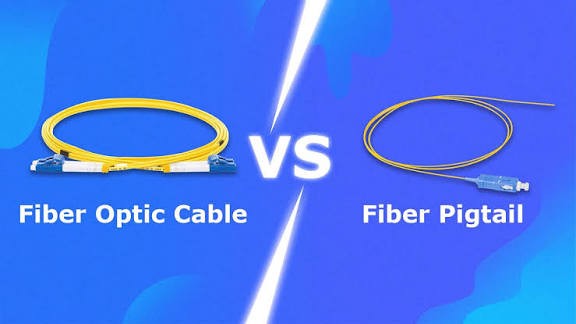
A fiber pigtail and a fiber patch cord may use the same connector and fiber type, but they are designed for different functions.
Feature | Simplex Fiber Pigtail | Fiber Patch Cord |
|---|---|---|
Fiber count | Usually one fiber | One or more fibers |
Connector ends | Connector on one end | Normally connectors on both ends |
Other end | Unterminated for splicing | Connectorized |
Main purpose | Permanent fiber termination | Equipment or panel interconnection |
Typical installation | Splice tray, ODF, termination box | Rack, panel, transceiver, equipment |
Field operation | Usually requires splicing | Normally plug-and-connect |
A simplex pigtail therefore becomes part of the permanent fiber termination, while a patch cord is normally removable and used to connect two optical interfaces.
Although cutting a patch cord in half may appear to create two pigtails, purpose-built pigtails are usually a better choice because their fiber protection, length, connector termination, packaging, and installation format are designed specifically for splicing applications.
Common Simplex Fiber Pigtail Connector Types
The connector should always match the adapter or optical interface in the system.
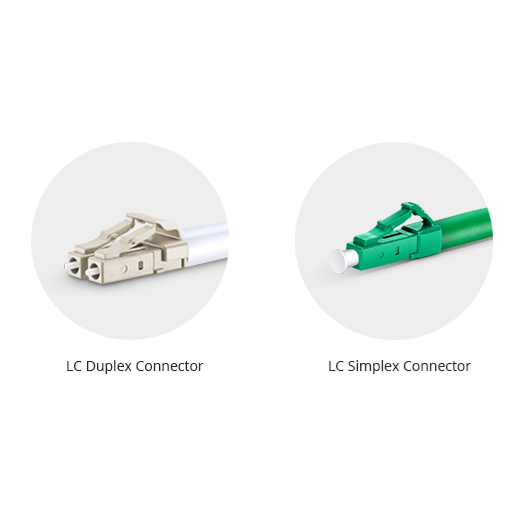
LC Fiber Pigtail
An LC fiber pigtail uses a compact connector with a 1.25 mm ferrule.
Its small form factor makes LC particularly suitable for high-density fiber distribution systems and compact optical equipment. LC interfaces are commonly found in telecommunications equipment, data centers, optical distribution frames, network devices, and test systems.
Both UPC and APC versions are available for single mode applications.
SC Fiber Pigtail
An SC fiber pigtail uses a larger 2.5 mm ferrule and a push-pull connector mechanism.
SC connectors are widely used in fiber distribution systems because they are simple to insert and remove. Common applications include FTTH networks, PON systems, telecom equipment, fiber termination boxes, patch panels, and optical distribution frames.
SC/UPC and SC/APC are both common single mode configurations.
FC Fiber Pigtail
An FC fiber pigtail uses a threaded coupling mechanism and a 2.5 mm ferrule.
The threaded connection provides secure mechanical retention, making FC connectors common in optical instruments, test and measurement equipment, laboratory systems, fiber lasers, sensors, and some telecommunications systems.
FC pigtails are available with different polishing options depending on the optical interface.
ST and Other Connector Types
ST connectors use a bayonet-style locking mechanism and are still found in some legacy, industrial, and multimode fiber systems.
Other connector types, including E2000 connector and specialized interfaces, may also be supplied when required by a particular network or optical system.
For most modern installations, however, LC, SC, and FC remain among the most frequently encountered simplex pigtail connector types.
UPC vs APC Simplex Fiber Pigtails
Connector polish is particularly important in single mode fiber systems.
UPC Pigtail
UPC stands for Ultra Physical Contact. The fiber end face is polished to create close physical contact between two correctly mated connector ferrules.
UPC connectors are widely used in telecom equipment, data communication systems, test equipment, and other general optical connections.
APC Pigtail
APC stands for Angled Physical Contact.
An APC connector uses an angled end face, typically designed to direct reflected optical energy away from the fiber core. This provides improved reflection performance compared with a conventional physical-contact connector and is useful in systems sensitive to optical reflections.
APC connectors are common in PON, FTTH, CATV, high-performance telecom, sensing, and other reflection-sensitive optical systems.
Can UPC and APC Be Connected Together?
UPC and APC polished connectors should not normally be directly mated.
Even when the connector body can physically fit into a compatible adapter format, the two end faces have different geometries. Mating them can result in excessive insertion loss, poor return loss, and undesirable contact between the connector surfaces.
The polish type of the pigtail should therefore match the equipment port, adapter, or mating connector.
Connector color can help with identification, but the actual connector specification should always be verified rather than relying only on housing color.
Single Mode vs Multimode Simplex Fiber Pigtails
Simplex pigtails can be manufactured using both single mode and multimode optical fibers.
OS2 single mode fiber pigtails are widely used for long-distance and low-loss optical transmission, including telecom networks, FTTH, PON systems, metropolitan networks, optical equipment, and many industrial or laboratory applications.
Multimode pigtails can use OM1, OM2, OM3, OM4, or other multimode fiber types depending on the network.
The important rule is that the pigtail fiber should match the fiber and optical system to which it will be connected.
Splicing fibers with significantly different optical characteristics can introduce additional loss or affect system performance. Fiber specification should therefore be confirmed before ordering rather than selecting a pigtail based only on its connector type.
Where Are Fiber Pigtails Used?
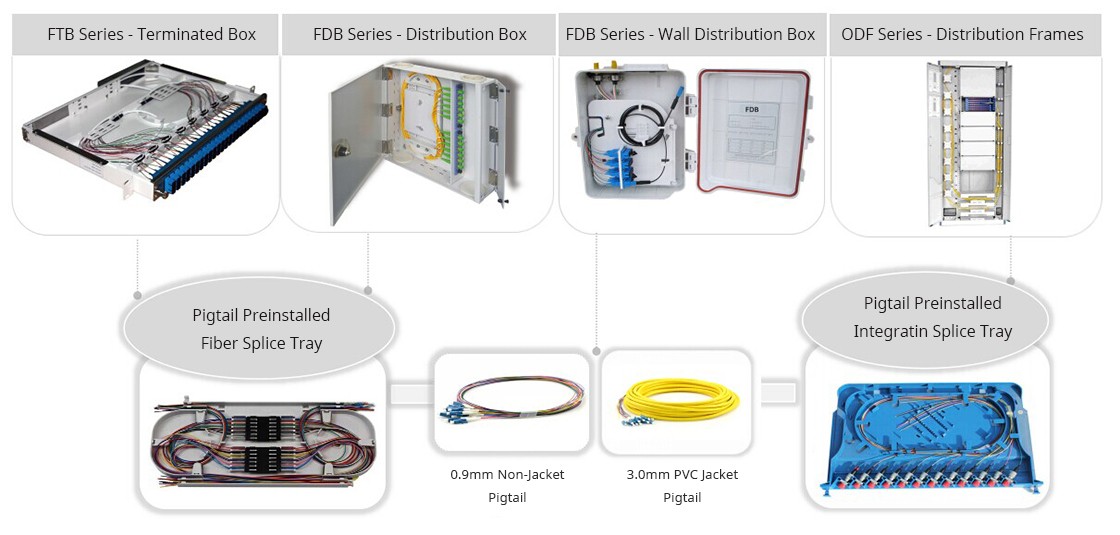
One of the most common applications is inside an optical distribution frame, or ODF.
Incoming fiber cables contain multiple individual fibers. Each fiber can be spliced to a pigtail, and the connector end of each pigtail is mounted into an adapter on the distribution panel. Patch cables can then be connected and disconnected from the front without disturbing the permanent incoming fiber.
The same principle is used in fiber termination boxes and patch panels. The installed cable remains permanently spliced inside the enclosure, while the connector provides an accessible interface for network connections.
Simplex pigtails are also commonly used in FTTH and PON networks, where optical fibers need to be terminated inside distribution boxes, cabinets, or customer-side equipment.
In laboratories and test systems, FC, LC, or SC pigtails may be spliced into fiber assemblies, sensors, components, instruments, or experimental optical setups.
Industrial fiber systems can use pigtails inside protected enclosures to transition between permanently installed fiber and replaceable equipment connections.
How Is a Simplex Fiber Pigtail Installed?
The exact installation procedure depends on the cable and enclosure, but a fusion-spliced pigtail generally follows the same basic process.
Prepare the Installed Fiber
The required fiber is identified and carefully removed from the cable or fiber management system. Any protective coating or buffer required for the splice is stripped according to the splicing procedure.
Prepare the Pigtail
The unterminated end of the pigtail is stripped to expose the fiber. The fiber is then cleaned to remove coating residue and contamination.
Cleave Both Fibers
A precision fiber cleaver is used to prepare suitable end faces on the installed fiber and pigtail.
Cleave quality is important because poor end-face geometry can affect splice quality.
Fusion-Splice the Fibers
The two fibers are placed into the fusion splicer, aligned, and joined with an electric arc.
Modern fusion splicers normally provide an estimated splice-loss value, but this estimate should not be considered a substitute for appropriate link testing where measured performance is required.
Protect and Route the Splice
A heat-shrink splice protection sleeve is normally positioned over the completed splice and shrunk in the splice heater.
The splice is then secured inside the splice tray, and the remaining pigtail fiber is routed according to the enclosure's fiber management design and minimum bend-radius requirements.
Connect and Test
The connector end is cleaned and inspected before being connected to its adapter or equipment interface.
Depending on the installation, the completed fiber path may then be tested using an optical power meter and light source, OTDR, or other suitable fiber test equipment.
How to Choose the Correct Simplex Fiber Pigtail
Selecting a pigtail should start with the optical system rather than the product appearance.
Match the Fiber Type
Confirm whether the installed system uses OS2 single mode or a particular multimode fiber type.
For a single mode network, also check whether the project specifies a particular fiber standard or bend-insensitive fiber requirement.
Match the Connector
The pigtail connector must correspond to the adapter or equipment port.
For example, an LC interface requires an LC pigtail, while an SC adapter requires an SC connector.
Choose UPC or APC Correctly
Check the mating connector before choosing the polish.
If the system uses an APC interface, select the appropriate APC pigtail. If it uses UPC, select UPC.
This should not be treated as a cosmetic connector-color decision.
Check Pigtail Length
The pigtail must be long enough to reach from the splice location to the adapter while leaving sufficient fiber for routing and maintenance.
Excessively short pigtails make splicing and fiber management difficult, while unnecessarily long fibers can overcrowd a compact splice enclosure.
Check Buffer and Protection
A compact buffered fiber is suitable for many protected distribution boxes and splice trays.
Other applications may require additional mechanical protection, different tubing, or specialized fiber construction.
Review Optical Specifications
Insertion loss, return loss, operating wavelength, connector performance, and other specifications should be checked against the requirements of the optical system.
Applications involving sensitive measurement, high optical power, narrow-linewidth lasers, interferometric systems, or unusual environmental conditions may require specifications beyond those normally used in telecommunications cabling.
Simplex vs Duplex Fiber Pigtail
The main difference is the number of fibers.
A simplex pigtail contains one fiber. A duplex configuration contains two fibers or two coordinated pigtails and may be used where separate transmit and receive paths are required.
The correct choice therefore depends on the physical link design.
Traditional duplex Ethernet optical links often use two fibers, one for transmission in each direction. BiDi systems, PON networks, WDM systems, and other architectures may use one fiber for both directions by separating signals according to wavelength.
This is another reason why “simplex” should not be interpreted solely as a description of traffic direction.
Why Use Factory-Terminated Fiber Pigtails?
The principal advantage of a fiber pigtail is that it combines a factory-finished connector with a permanent field splice.
Connector ferrule geometry and end-face polishing can be controlled during manufacturing, while fusion splicing provides an efficient method of connecting the pigtail to installed fiber.
This is particularly useful when terminating large fiber-count cables. Instead of installing and polishing an individual connector directly onto every field fiber, technicians can splice prepared pigtails and organize the completed connections inside a standard splice tray.
Pigtails also make maintenance easier. The permanent splice remains protected inside the enclosure, while routine network patching takes place through the connector interface.
Frequently Asked Questions About Simplex Fiber Pigtails
What is a simplex fiber pigtail?
A simplex fiber pigtail consists of one optical fiber with a connector installed on one end and an unterminated fiber on the other. The unterminated end is normally spliced to an installed optical fiber.
What is the difference between a fiber pigtail and a patch cord?
A pigtail normally has one connectorized end and one bare end for splicing. A patch cord normally has connectors on both ends and is designed to connect two optical interfaces directly.
Can a simplex fiber carry signals in both directions?
Yes. “Simplex” describes the one-fiber physical construction of the assembly. With suitable BiDi or wavelength-division technology, a single optical fiber can carry signals in both directions.
Should I choose UPC or APC?
Choose the polish type that matches the mating adapter or equipment interface. APC is commonly selected where lower optical reflection is required, while UPC is widely used in general fiber optic systems. UPC and APC connector end faces should not normally be directly mated.
What connector is best for a simplex fiber pigtail?
There is no single connector that is best for every application. LC is useful for compact and high-density interfaces, SC is widely used in telecom and FTTH distribution systems, and FC provides a threaded connection commonly used in test, laboratory, and optical equipment.
Choosing Simplex Fiber Pigtails for Your Fiber Network
A simplex fiber pigtail is a small component, but it forms an important transition between permanently installed optical fiber and a connectorized network interface.
The correct pigtail should match the fiber type, connector, polish, length, mechanical construction, and optical performance required by the system.
Firsol provides simplex fiber pigtails for fiber splicing, distribution, termination, telecom, FTTH, network infrastructure, test equipment, and other optical applications. LC, SC, FC, ST and different UPC/APC configurations are available depending on the required specification.
Explore Firsol Simplex Fiber Pigtails to select the appropriate configuration for your application, or contact Firsol for custom fiber type, connector, length, packaging, labeling, and project requirements.