What Is a Fixed Fiber Optic Attenuator and How to Choose the Right One?
In fiber optic communication systems, optical power must be controlled within a proper range to ensure stable signal transmission and reliable equipment performance. When the received optical power is too high, optical receivers, transceivers, or test instruments may become overloaded, resulting in unstable performance, bit errors, or link failure. A fixed fiber optic attenuator is a simple and effective passive component used to reduce optical power by a specific attenuation value.
This article explains what a fixed fiber optic attenuator is, how it works, where it is used, and how to select the right attenuator for different fiber optic applications.
What Is a Fixed Fiber Optic Attenuator?
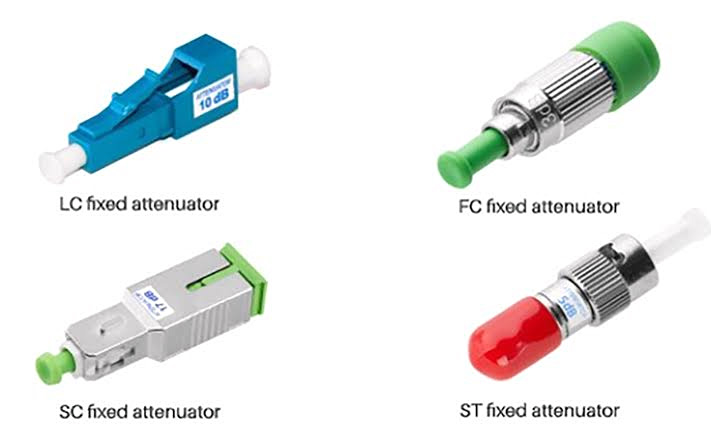
A fixed fiber optic attenuator is a passive optical device designed to reduce the power level of an optical signal by a fixed amount. Unlike variable optical attenuators, which allow the attenuation value to be adjusted, a fixed attenuator provides a preset attenuation level, such as 1dB, 3dB, 5dB, 10dB, 15dB, or 20dB.
Fixed fiber optic attenuators are commonly installed between fiber optic equipment and patch cables, or between adapters and optical transceivers. They help ensure that the optical signal received by the equipment stays within the recommended input power range.
In practical fiber optic networks, fixed attenuators are widely used to prevent receiver overload, balance optical power, simulate transmission loss, and support accurate fiber link testing.
Why Is Optical Attenuation Needed?
In a fiber optic link, too much optical power can be just as problematic as too little power. Short-distance links, high-power optical modules, EDFA-amplified systems, and testing environments may produce optical signals that exceed the receiver’s acceptable input range.
When optical power is too high, several issues may occur:
Receiver saturation
Increased bit error rate
Unstable optical link performance
Measurement errors during testing
Potential stress on sensitive optical components
A fixed fiber optic attenuator reduces the optical signal to a safe and suitable level. This allows the receiver to operate within its designed optical power range and helps maintain consistent link performance.
How Does a Fixed Fiber Optic Attenuator Work?
A fixed fiber optic attenuator works by introducing a controlled optical loss into the fiber link. The attenuation value is measured in decibels, or dB. A higher dB value means a greater reduction in optical power.
For example, a 5dB fixed attenuator reduces optical power less than a 10dB fixed attenuator. The correct attenuation value depends on the transmitted optical power, receiver sensitivity, link budget, and required operating margin.
Fixed fiber optic attenuators are designed to provide stable attenuation performance across the specified operating wavelength range, such as 1260–1620nm for many single mode attenuators.
Common Types of Fixed Fiber Optic Attenuators
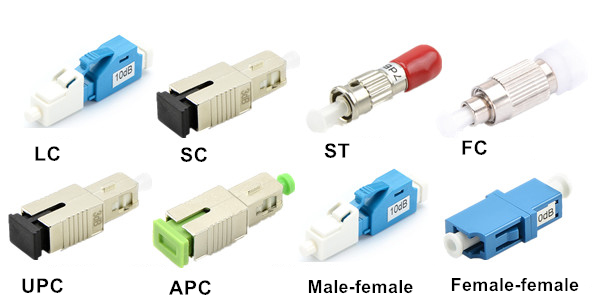
Fixed fiber optic attenuators are available in different connector types, polishing types, and physical structures. The most common style is the male-female plug-in attenuator.
Male-Female Fixed Fiber Optic Attenuator
A male-female fixed fiber optic attenuator has a male connector on one end and a female adapter interface on the other end. This structure allows it to be directly plugged into optical equipment, fiber adapters, patch panels, or transceivers.
For example, an LC/UPC male-female fixed fiber optic attenuator can be connected directly to an LC adapter or LC transceiver interface, while the LC patch cable connects to the female side of the attenuator.
This design is compact, easy to install, and suitable for field deployment, lab testing, and network maintenance.
LC, SC, FC, and ST Fixed Attenuators
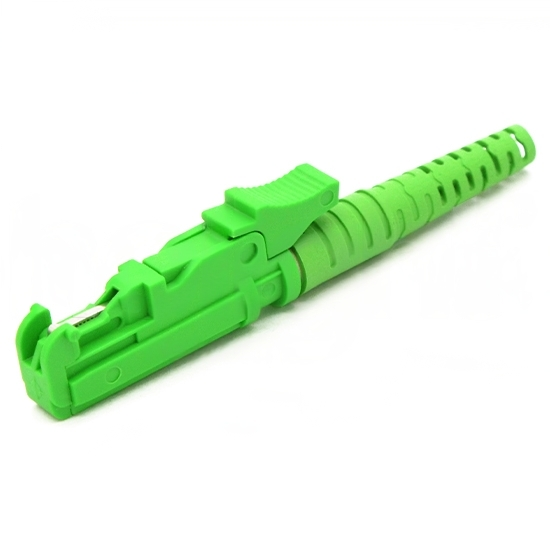
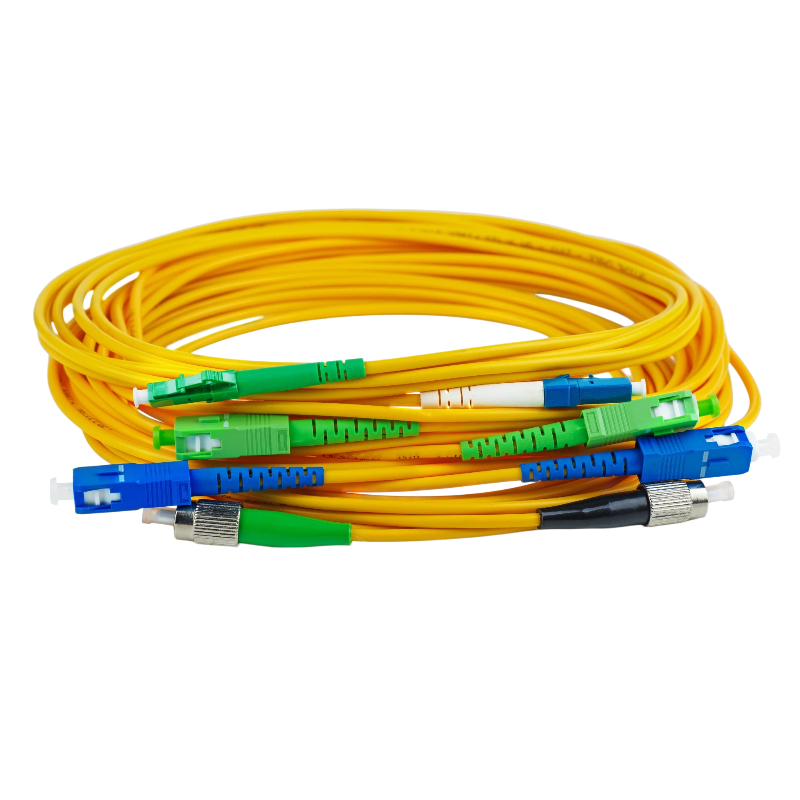
Fixed fiber optic attenuators are commonly available with LC, SC, FC, and ST connector interfaces.
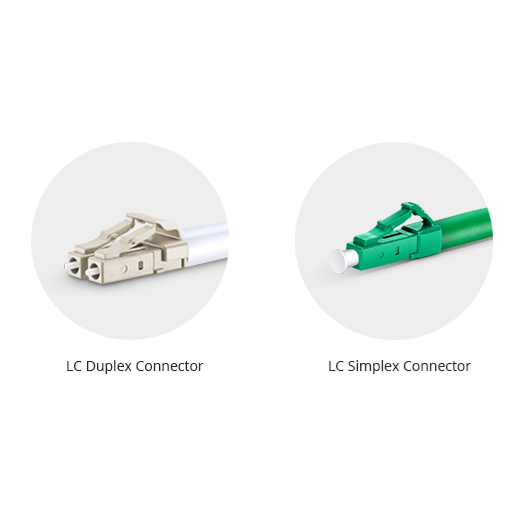
LC fixed fiber optic attenuators are widely used in high-density data centers, optical transceivers, telecom systems, and compact patching environments.
SC fixed fiber optic attenuators are commonly used in telecom networks, CATV systems, FTTH networks, and general fiber optic cabling systems.
FC fixed fiber optic attenuators feature a threaded coupling structure, providing a secure and stable connection for test equipment, industrial optical systems, and measurement applications.
ST fixed fiber optic attenuators use a bayonet-style coupling structure and are often used in legacy fiber networks, test systems, and industrial communication applications.
UPC vs APC Fixed Fiber Optic Attenuators
Polish type is an important factor when selecting a fixed fiber optic attenuator. The two most common polish types are UPC and APC.
UPC fixed fiber optic attenuators use an ultra physical contact polish and are commonly used in standard single mode fiber links where stable insertion loss performance is required.
APC fixed fiber optic attenuators use an angled physical contact polish. The angled end face helps reduce back reflection and supports high return loss performance, making APC attenuators suitable for optical links that are more sensitive to reflected signals.
In general, UPC attenuators are often used in data communication and general telecom systems, while APC attenuators are preferred in CATV, FTTx, PON, and other applications where low back reflection is important.
It is important not to mix UPC and APC connectors. For example, an LC/APC attenuator should be used with LC/APC interfaces, while an LC/UPC attenuator should be used with LC/UPC interfaces.
Typical Applications of Fixed Fiber Optic Attenuators
Fixed fiber optic attenuators are used in many fiber optic systems where optical power control is required.
Optical Receiver Protection
In short-distance fiber links or high-power transmission systems, the received optical power may exceed the receiver’s input range. A fixed attenuator helps reduce the optical signal and protects the receiver from overload.
Data Center Fiber Links
In data centers, fixed fiber optic attenuators are often used with optical transceivers to balance link power, especially when transmission distance is short or optical modules have high output power.
Telecom and CATV Networks
Telecom and CATV systems often require stable optical power levels across multiple network nodes. Fixed attenuators help control signal strength and improve link stability.
Fiber Optic Testing and Measurement
During testing, fixed fiber optic attenuators can be used to simulate link loss, verify receiver sensitivity, test system margins, and evaluate equipment performance under controlled optical power conditions.
EDFA and High-Power Optical Systems
In amplified optical systems, such as EDFA-based links, optical power may need to be reduced before entering downstream receivers or test instruments. Fixed attenuators provide a simple method for power adjustment.
How to Choose the Right Fixed Fiber Optic Attenuator
Selecting the right fixed fiber optic attenuator depends on several key specifications.
1. Choose the Correct Connector Type
The attenuator connector type must match your equipment and fiber patch cable. Common options include LC, SC, FC, and ST.
For high-density transceiver applications, LC is commonly used. For general telecom and CATV applications, SC is widely used. For test equipment or secure connection requirements, FC may be preferred. For legacy or industrial systems, ST may still be required.
2. Choose the Correct Polish Type
The polish type should match the connector interface in your fiber link. UPC should be connected to UPC, and APC should be connected to APC.
Using the wrong polish type can cause high insertion loss, poor return loss, connector damage, or unstable performance.
3. Select the Proper Attenuation Value
The attenuation value should be selected based on the optical power budget of the link. Common values include 1dB, 2dB, 3dB, 5dB, 10dB, 15dB, 20dB, and 25dB.
A value that is too low may not sufficiently reduce the optical power, while a value that is too high may cause the received signal to become too weak. The ideal value keeps the received power within the acceptable range of the optical receiver.
4. Check the Operating Wavelength
Single mode fixed fiber optic attenuators are typically designed for common single mode wavelength ranges, such as 1310nm, 1490nm, 1550nm, and 1625nm. For broadband applications, an operating range such as 1260–1620nm is commonly used.
5. Consider Return Loss Requirements
Return loss is especially important in systems sensitive to reflected light. APC attenuators generally provide better return loss performance than UPC attenuators, making them suitable for PON, CATV, and high-stability optical networks.
6. Confirm Mechanical and Environmental Requirements
For field installation, equipment rooms, and industrial environments, the attenuator should provide stable mechanical connection and reliable performance over the required operating temperature range.
Fixed Fiber Optic Attenuator vs Variable Optical Attenuator
Fixed fiber optic attenuators and variable optical attenuators both reduce optical power, but they are used in different situations.
A fixed fiber optic attenuator provides a preset attenuation value and is suitable for permanent or repeatable optical power control. It is compact, cost-effective, and easy to install.
A variable optical attenuator allows the attenuation value to be adjusted. It is more suitable for laboratory testing, dynamic power adjustment, system debugging, and applications where the required attenuation value may change frequently.
For most installed fiber links where the required attenuation value is already known, a fixed fiber optic attenuator is usually the simpler and more economical choice.
Firsol Fixed Fiber Optic Attenuator Options
Firsol provides single mode fixed fiber optic attenuators for stable optical power reduction in fiber optic communication systems. Available options include LC, SC, FC, and ST interfaces, with UPC and APC polish types for different network requirements.
Common product options include:
Single Mode LC/UPC Fixed Fiber Attenuator, Male-Female
Single Mode LC/APC Fixed Fiber Attenuator, Male-Female
Single Mode SC/UPC Fixed Fiber Attenuator, Male-Female
Single Mode SC/APC Fixed Fiber Attenuator, Male-Female
Single Mode FC/UPC Fixed Fiber Attenuator, Male-Female
Single Mode FC/APC Fixed Fiber Attenuator, Male-Female
Single Mode ST/UPC Fixed Fiber Attenuator, Male-Female
These attenuators are suitable for telecom networks, data centers, CATV systems, test equipment, fiber optic transmission systems, and other optical power management applications. Standard attenuation values and custom options are available to support different link budget requirements.
Conclusion
A fixed fiber optic attenuator is an essential passive component for optical power control in fiber optic networks. By reducing optical power to a suitable level, it helps prevent receiver overload, balance signal strength, improve link stability, and support accurate testing.
When selecting a fixed fiber optic attenuator, it is important to consider connector type, polish type, attenuation value, operating wavelength, return loss, and application environment. Choosing the correct attenuator helps ensure stable and reliable performance in telecom, data center, CATV, testing, and industrial fiber optic systems.