Advantages and Disadvantages of Optical Fiber
Optical fiber has become the default medium for telecom backbones, broadband access, and data-center interconnects — and for good reason. It offers greater bandwidth, lower loss, and immunity to interference that copper simply cannot match. But fiber is not the right answer for every job. This guide weighs the real advantages and disadvantages of optical fiber from a procurement and network-planning perspective, so you can decide when fiber is worth it and how to specify it correctly.
What Is Optical Fiber?
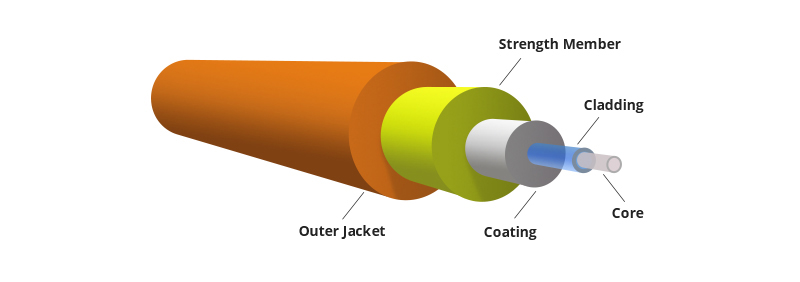
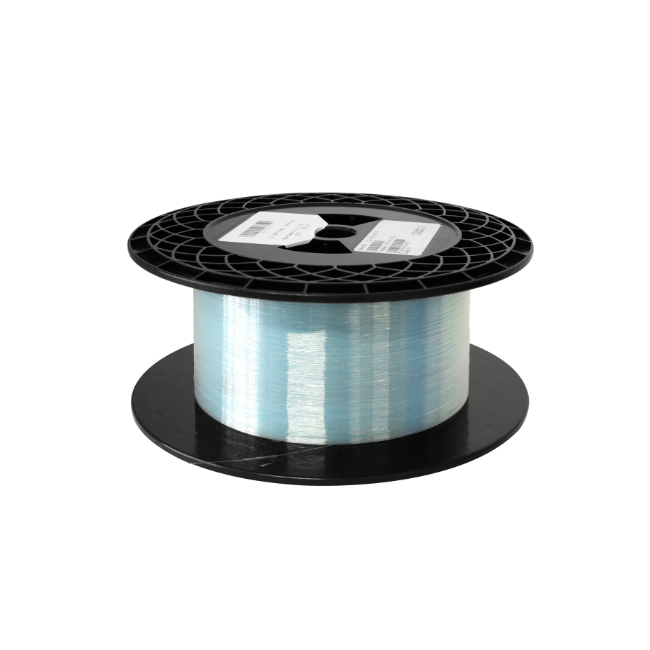
Optical fiber transmits data as pulses of light travelling through a thin glass core rather than as electrical signals down copper. A laser or LED converts data into light, which is guided along the fiber by total internal reflection and converted back to data at the receiver. Because light suffers far less loss and no electromagnetic interference, fiber carries much more information over far greater distances than copper — which is exactly why it now underpins voice, video, and data networks worldwide.
Advantages of Optical Fiber
Greater bandwidth and speed — A single fiber can carry enormous amounts of data, and with DWDM one fiber pair can transport many terabits per second. This capacity headroom is fiber's single biggest advantage.
Longer distance, lower loss — Single mode fiber attenuates at around 0.2–0.4 dB/km, versus several dB per hundred meters for copper. Signals travel tens to over a hundred kilometers before needing regeneration.
Immune to electromagnetic interference (EMI) — Because it carries light, not current, fiber is unaffected by EMI, RFI, crosstalk, and ground loops — ideal for noisy industrial, power, and rail environments.
Thinner and lighter — Glass strands are far thinner than copper conductors, so more fibers fit in a given cable diameter and cable weight drops — a real benefit in packed ducts and risers.
Higher fiber count per cable — The small strand size lets a single cable pack hundreds of fibers, dramatically raising capacity per conduit.
More secure — Fiber does not radiate signals and is difficult to tap without detection, an advantage for sensitive networks.
Long service life — Properly installed and protected fiber cable has a long field life and is future-proof: the same glass can often be upgraded to higher speeds by changing only the transceivers.
Disadvantages of Optical Fiber
Higher upfront and termination cost — While bulk fiber can be cheaper than copper per meter, the transceivers, connectors, splicing, and skilled labor raise the total installed cost, especially on short links.
Fragility and handling — Glass fiber is sensitive to tight bends, crushing, and excess tension. Respect the minimum bend radius and pulling tension during installation.
Specialized tools and skills — Fusion splicers, cleavers, and inspection scopes are required, and technicians need training to achieve low-loss terminations.
No power delivery — Unlike copper (PoE), fiber cannot carry electrical power to remote devices, so powered endpoints need a separate supply.
Contamination sensitivity — A speck of dust on a connector end-face can wreck a link. End-faces must be inspected and cleaned, and unused ports capped with dust caps.
Optical Fiber vs Copper: Quick Comparison
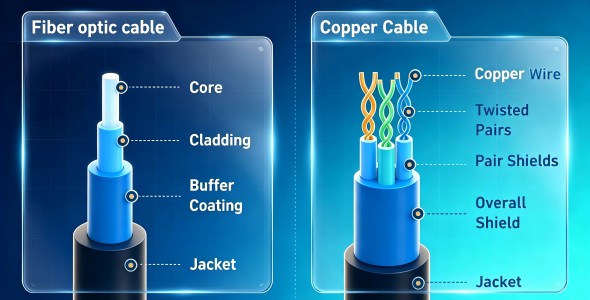
Attribute | Optical Fiber | Copper (Cat6/6A) |
|---|---|---|
Bandwidth | Extremely high (Tbps with DWDM) | Up to ~10 Gbps |
Max distance | Tens to 100+ km (SMF) | ~100 m |
Attenuation | ~0.2–0.4 dB/km (SMF) | Several dB per 100 m |
EMI immunity | Complete | Susceptible |
Power over cable | No | Yes (PoE) |
Weight & size | Thin, light, high density | Bulkier, heavier |
Termination | Splice / connectorize, skilled | Simple, low-skill |
Best for | Backbone, long-haul, high capacity | Short in-room runs, powered devices |
When Is Fiber Worth It?
Choose fiber for any link over ~100 m, high-bandwidth backbones, campus/inter-building runs, EMI-heavy environments, and anywhere you want a future-proof upgrade path.
Copper can still win for short in-room runs to powered devices (PoE cameras, access points) where cost and simplicity matter more than distance.
Many networks are hybrid: fiber for the backbone and horizontal runs, copper for the last few meters to endpoints.
How to Choose the Right Fiber Cable
Fiber mode: single mode or multimode
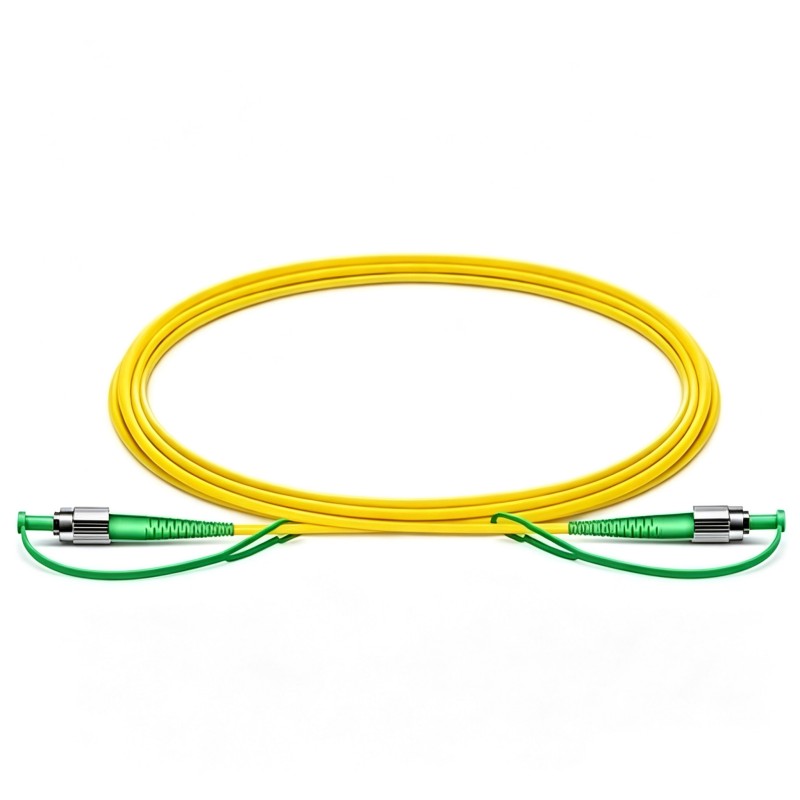
Single mode (OS2) suits long distances and high capacity; multimode (OM3/OM4/OM5) is cost-effective for short data-center and in-building links. See our single mode vs multimode guide for the full breakdown.
Jacket rating: OFNR, OFNP, or LSZH
OFNR (riser) is the general-purpose indoor standard; OFNP (plenum) is required in air-handling spaces; LSZH (low smoke zero halogen) is specified where smoke and toxicity must be minimized. Always follow the local fire code.
Indoor vs outdoor construction
Outdoor and duct/direct-burial cables add water-blocking and UV protection; indoor cables prioritize flexibility and fire rating. Indoor/outdoor dual-rated cables bridge campus routes.
Fiber count and spares
Cables range from 2 to 144+ fibers. Unless you are building a simple two-fiber patch, always pull spare fibers — adding capacity later is far more expensive than including it now.
Frequently Asked Questions
Is optical fiber better than copper?
For bandwidth, distance, and interference immunity, yes. Copper still wins on cost and simplicity for very short runs and where you need to deliver power (PoE) over the same cable.
Is fiber more expensive than copper?
Bulk fiber can be cheaper per meter, but transceivers, connectors, splicing, and skilled labor raise the installed cost — most noticeably on short links. Over long distances and high capacity, fiber is usually more economical.
How long does optical fiber last?
Properly installed and protected fiber cable has a long field life, and because upgrades often only require new transceivers, the same fiber can serve many technology generations.
Why is fiber so fragile?
The light-carrying core is thin glass. It tolerates normal handling but is damaged by tight bends, crushing, or over-tensioning — so respect the bend radius and pulling limits on the datasheet.
Can fiber carry electrical power like PoE?
No. Fiber carries only light, so powered endpoints need a separate power source or a hybrid copper run for PoE.