Polarization Beam Splitters & Combiners (PBS/PBC): Types, Specs, and How to Choose
What Is a Polarization Beam Splitter / Combiner?
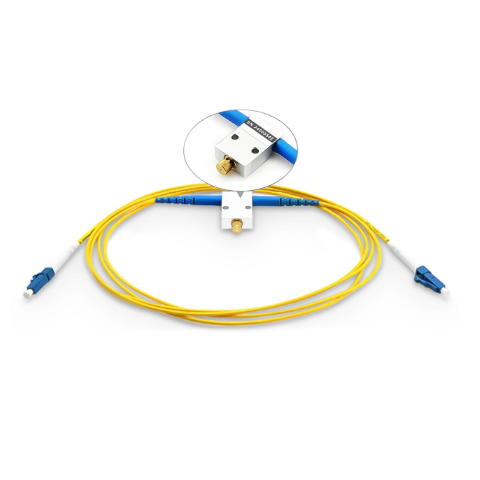
A Polarization Beam Splitter (PBS) separates an unpolarized or arbitrarily polarized input beam into two orthogonally polarized outputs — typically a p-polarized beam (transmitted) and an s-polarized beam (reflected or routed to a second port). A Polarization Beam Combiner (PBC) is the same device used in reverse: it merges two orthogonally polarized inputs into a single output fiber.
Unlike WDM components, PBS/PBC devices route light by polarization state, not wavelength or intensity. This makes them essential building blocks in coherent communication, polarization-diversity receivers, fiber lasers, and quantum optics systems.
Two Methods of Polarization Combining
1. Incoherent Polarization Combining
The simpler approach. Two independent laser sources are launched onto a polarization-selective element so that one beam is transmitted (p-pol) and the other reflected (s-pol). Both then propagate co-axially in the same direction.
Result: An unpolarized output carrying the combined optical power of both inputs, with preserved beam quality and roughly doubled brightness.
Typical use: End-pumping solid-state lasers, EDFA pump combining, and any application where a polarized output is not required.
Limitation: Not suitable for further power scaling — adding a third source breaks the orthogonality requirement.
2. Coherent Polarization Combining
When two mutually coherent beams (sharing wavelength and phase relationship) are combined, the output retains a well-defined linear polarization state. With equal input powers, the output polarization is rotated 45° relative to either input axis.
Result: A linearly polarized output that can be fed into another stage of combining — making this method scalable for high-power systems.
Typical use: High-power fiber lasers, coherent transmitters, PDM-QPSK / DP-16QAM systems, and quantum communication links.
Incoherent vs Coherent — At a Glance
Property | Incoherent Combining | Coherent Combining |
|---|---|---|
Source coherence required | No | Yes (phase-locked) |
Output polarization | Unpolarized | Linear (typically 45°) |
Scalable to multiple stages | No | Yes |
Complexity / cost | Low | Higher (phase control needed) |
Typical applications | Pump combining, illumination | Coherent comms, high-power fiber lasers |
Firsol PBS / PBC Key Specifications
Parameter | Standard Spec | Premium Spec |
|---|---|---|
Operating wavelength | 1310 / 1480 / 1550 nm | 1064 / 1310 / 1550 / C+L band |
Insertion loss (max) | ≤ 0.6 dB | ≤ 0.4 dB |
Polarization extinction ratio (PER) | ≥ 22 dB | ≥ 25 dB |
Return loss | ≥ 50 dB | ≥ 55 dB |
Fiber type | SMF-28 / PM PANDA | PM PANDA, slow / fast axis blocked |
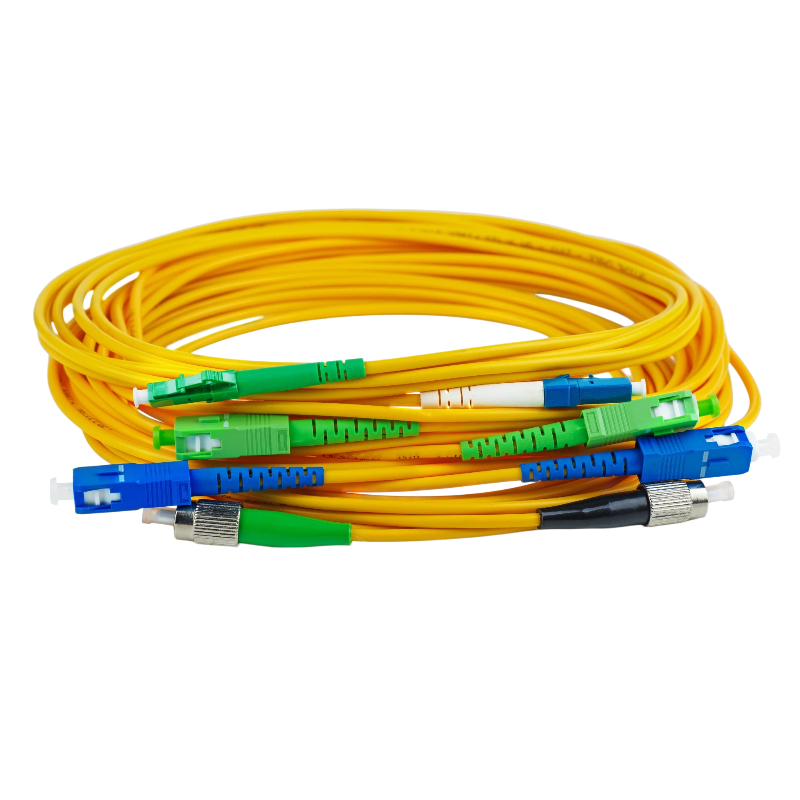
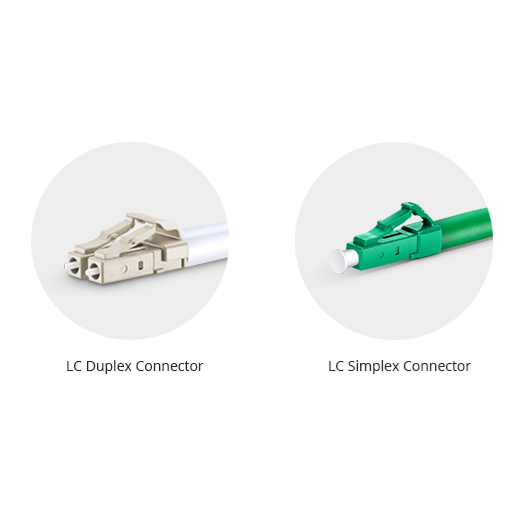
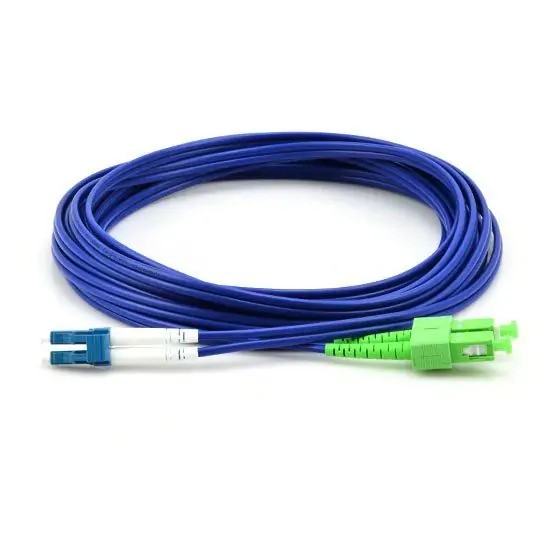
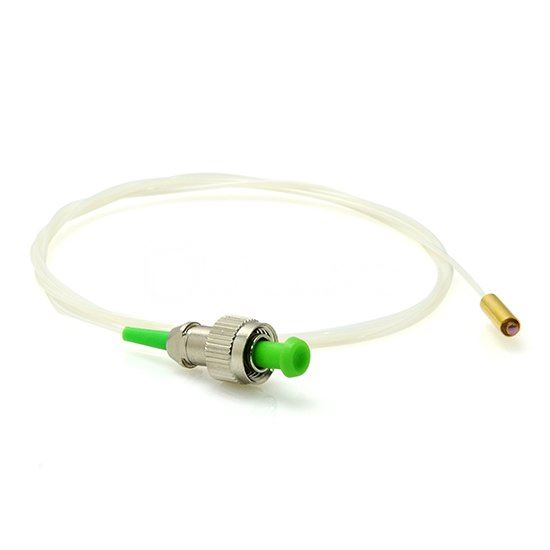
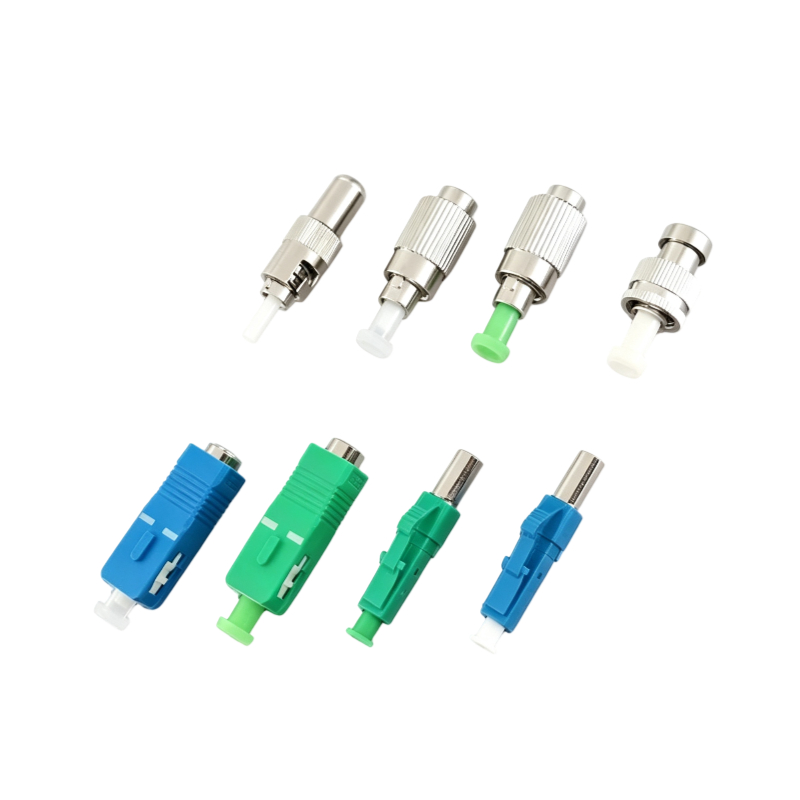
Connector options | FC/PC, FC/APC, LC/PC, LC/APC | Custom |
Maximum optical power | 500 mW | ≥ 5 W (high-power version) |
Operating temperature | -5 to +70 °C | -40 to +85 °C (telcordia) |
How to Choose the Right PBS / PBC
Polarization-Maintaining (PM) or Single-Mode (SM)? Coherent combining and most polarization-sensitive systems require PM fiber with the slow axis aligned. Incoherent pump combining can use SM.
Slow-axis or fast-axis blocked? Specify which axis is preserved at each port to ensure your downstream component sees the correct polarization.
Wavelength range: Single-wavelength devices give the lowest IL and highest PER. Wideband versions (e.g. C-band) trade some performance for flexibility.
Power handling: For fiber-laser applications above 1 W, request the high-power variant with reinforced epoxy and connectorization.
Connector & polish: Use APC (8°) for any application where back-reflection matters (coherent receivers, narrow-linewidth lasers).
Typical Applications
Coherent optical transceivers (PDM-QPSK, DP-16QAM) — combining and separating polarization-multiplexed channels.
High-power fiber lasers — power scaling beyond what a single gain stage can deliver.
EDFA pump combining — boosting pump power into a single gain fiber.
Polarization-diversity receivers in long-haul DWDM links.
Quantum key distribution (QKD) and quantum sensing experiments.
Fiber-optic gyroscopes and interferometric sensors.
Need a Custom PBS or PBC?
Firsol manufactures both standard and high-power PBS/PBC modules with PM PANDA fiber and your choice of connector and polish. For C-band coherent systems, high-power fiber lasers, or custom wavelength designs, our engineers can deliver a sample within 5–7 working days.
Contact our optical engineering team for a quote, datasheet, or custom design — include your wavelength, required PER, fiber type, and power level for the fastest response.